


Page 90 - World of Animals - Issue #29
P. 90
Wildlife photography


                   Get perfect shots of


                              animals in flight


                          Lift your shots up higher by mastering these tricks for

                                           photographing wildlife in motion


                Freeze movement
                Master panning
                Perfect composition


            Photographing animals in flight is one of the hardest
            wildlife photography pursuits, but it’s also one of the
            most rewarding. Whether it’s a shot of a flying fox, a


            butterfly travelling between plants, starlings creating epic

            patterns in the sky or bats flying through the night, in-

            flight shots capture some really interesting behaviour and                                   In-flight kit

            movements. You need to do your research beforehand
            so you know where to find the species you’d like to

            photograph, as well as what behaviour to look out for.
            Also be prepared with the right kit, including a telephoto
            lens or a camera with a decent zoom on it, and a
            monopod is brilliant for keeping your camera stable while
            being able to move about. Follow the tips in this article to
            come away with some photos you’ll always be proud of.
                                                                                                    Binoculars
                                                                                                    A decent pair of binoculars will help you track
                                                                                                    your animal while it’s in flight. This pair of

                                                                                                    Vanguard Endeavor ED II 8320 binoculars
                                                                                                    (www.vanguardworld.co.uk, £330) feature
                                                                                                    extra-low dispersion glass that gives edge-to-
                                                                                                    edge clarity.


                                                                                                    Bird hide
                                                                                                    A pop-up bird hide will help to keep you dry
                                                                                                    during wet weather, but it also disguises you
                                                                                                    from the animal you are photographing. This
                                                                                                    means you are more likely to capture natural
                                                                                                    behaviour on camera.


                                                                                                    Telephoto lens
                                                                                                    You’ll need a lens that will let you zoom in
                                                                                                    on the animal, such as this 70-300mm lens
                                                                                                    from Tamron (www.tamron.eu, £430). You
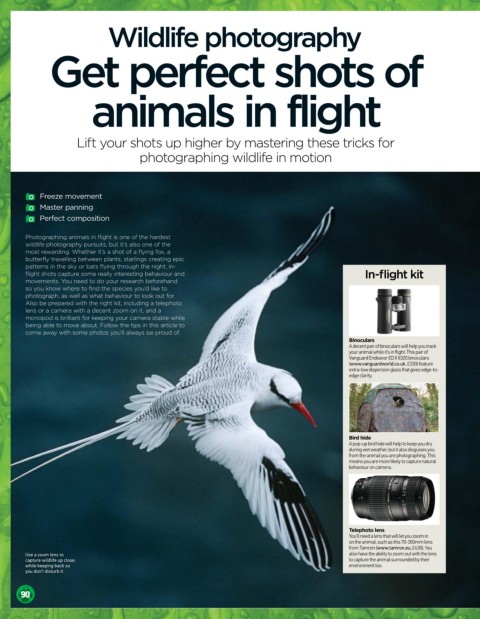
            Use a zoom lens to                                                                      also have the ability to zoom out with the lens
            capture wildlife up close,                                                              to capture the animal surrounded by their
            while keeping back so                                                                   environment too.
            you don’t disturb it

           90 90

