


Page 84 - BBC Wildlife Volume 36 #12
P. 84
WILD AT HOME


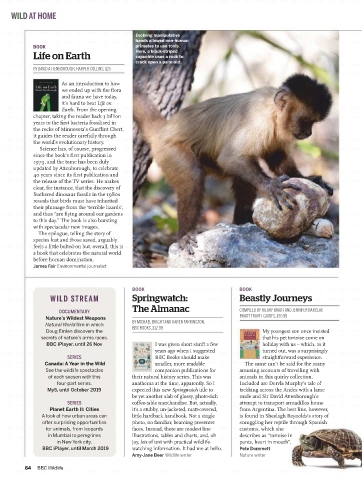
                                                                Evolving manipulative
                                                                hands allowed non-human
                BOOK                                            primates to use tools.
                                                                Here, a black-striped
                Life on Earth                                   capuchin uses a rock to
                                                                crack open a palm nut.
                BY DAVID ATTENBOROUGH, HARPER COLLINS, £25


                             As an introduction to how
                             we ended up with the flora
                             and fauna we have today,
                             it’s hard to beat Life on
                             Earth. From the opening
                chapter, taking the reader back 3 billion
                years to the first bacteria fossilised in
                the rocks of Minnesota’s Gunflint Chert,
                it guides the reader carefully through
                the world’s evolutionary history.
                    Science has, of course, progressed
                since the book’s first publication in
                1979, and the tome has been duly
                updated by Attenborough, to celebrate
                40 years since its first publication and
                the release of the TV series. He makes
                clear, for instance, that the discovery of
                feathered dinosaur fossils in the 1980s
                reveals that birds must have inherited
                their plumage from the ‘terrible lizards’,
                and thus “are flying around our gardens
                to this day.” The book is also bursting
                with spectacular new images.
                   The epilogue, telling the story of
                species lost and those saved, arguably
                feels a little bolted-on but, overall, this is
                a book that celebrates the natural world
                before human domination.
                James Fair Environmental journalist


                                                              BOOK                                              BOOK
                        WILD      STREAM                      Springwatch:                                      Beastly Journeys

                                                              The Almanac
                            DOCUMENTARY                                                                         COMPILED BY HILARY BRADT AND JENNIFER BARCLAY,
                                                                                                                BRADT TRAVEL GUIDES, £10.99
                       Nature’s Wildest Weapons
                                                              BY MICHAEL BRIGHT AND KAREN FARRINGTON,
                      Natural World film in which
                                                              BBC BOOKS, £12.99
                      Doug Emlen discovers the                                                                            My youngest son once insisted
                    secrets of nature’s arms races.                                                                       that his pet tortoise come on
                      BBC iPlayer, until 26 Nov                          I was given short shrift a few                   holiday with us – which, as it
                                                                         years ago when I suggested                       turned out, was a surprisingly
                                SERIES                                   BBC Books should make                            straightforward experience.
                      Canada: A Year in the Wild                         smaller, more readable                   The same can’t be said for the many
                      See the wildlife spectacles                        companion publications for             amusing accounts of travelling with
                       of each season with this               their natural history series. This was            animals in this quirky collection.
                           four-part series.                  anathema at the time, apparently. So I            Included are Dervla Murphy’s tale of
                       My5, until October 2019                expected this new Springwatch title to            trekking across the Andes with a lame
                                                              be yet another slab of glossy, photo-rich         mule and Sir David Attenborough’s
                                SERIES                        coffee-table merchandise. But, actually,          attempt to transport armadillos home
                        Planet Earth II: Cities               it’s a stubby, un-jacketed, matt-covered,         from Argentina. The best line, however,
                    A look at how urban areas can             little hardback handbook. Not a single            is found in Sheelagh Reynolds’s story of
                     ofer surprising opportunities            photo, no familiar, beaming presenter             smuggling her reptile through Spanish
                      for animals, from leopards              faces. Instead, there are modest line             customs, which she
                       in Mumbai to peregrines                illustrations, tables and charts, and, oh         describes as “tortoise in
                           in New York city.                  joy, lots of text with practical wildlife-        pants, heart in mouth”.
                      BBC iPlayer, until March 2019           watching information. It had me at hello.         Pete Dommett
                                                              Amy-Jane Beer Wildlife writer                     Nature writer


             84   BBC Wildlife

