


Page 47 - unit 2
P. 47
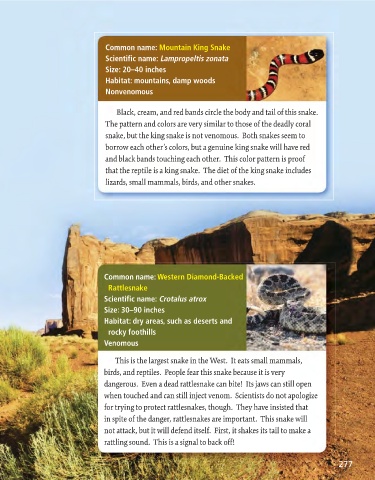
Common name: Mountain King Snake
Scientific name: Lampropeltis zonata
Size: 20–40 inches
Habitat: mountains, damp woods
Nonvenomous

   Black, cream, and red bands circle the body and tail of this snake.
The pattern and colors are very similar to those of the deadly coral
snake, but the king snake is not venomous. Both snakes seem to
borrow each other’s colors, but a genuine king snake will have red
and black bands touching each other. This color pattern is proof
that the reptile is a king snake. The diet of the king snake includes
lizards, small mammals, birds, and other snakes.

Common name: Western Diamond-Backed
 Rattlesnake

Scientific name: Crotalus atrox
Size: 30–90 inches
Habitat: dry areas, such as deserts and

 rocky foothills
Venomous

   This is the largest snake in the West. It eats small mammals,
birds, and reptiles. People fear this snake because it is very
dangerous. Even a dead rattlesnake can bite! Its jaws can still open
when touched and can still inject venom. Scientists do not apologize
for trying to protect rattlesnakes, though. They have insisted that
in spite of the danger, rattlesnakes are important. This snake will
not attack, but it will defend itself. First, it shakes its tail to make a
rattling sound. This is a signal to back off!

                                                                            277

