


Page 41 - นาวิกศาสตร์ มิถุนายน ๒๕๖๑
P. 41
the diplomatic role effectively. This article will
                  discuss about the value of naval diplomacy,
                  key advantages of naval forces as diplomatic
                  instruments, educational and training preparation

                  for the RTN personnel, sending the RTN personnel
                  for overseas job training, engagement of the RTN
                  personnel in the global community, and
                  analysis of the RTN policy implementation
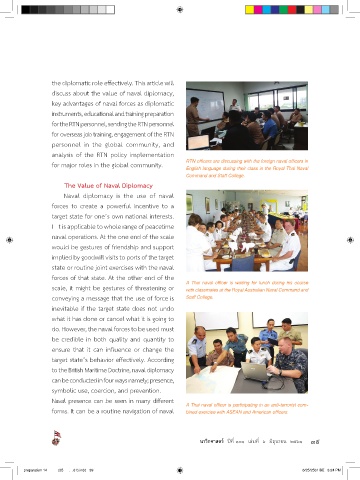
                  for major roles in the global community.     RTN officers are discussing with the foreign naval officers in
                                                               English language during their class in the Royal Thai Naval
                                                               Command and Staff College.
                      The Value of Naval Diplomacy

                      Naval diplomacy is the use of naval
                  forces to create a powerful incentive to a
                  target state for one’s own national interests.
                  I    t is applicable to whole range of peacetime
                  naval operations. At the one end of the scale
                  would be gestures of friendship and support
                  implied by goodwill visits to ports of the target
                  state or routine joint exercises with the naval
                  forces of that state. At the other end of the   A Thai naval officer is waiting for lunch during his course

                  scale, it might be gestures of threatening or   with classmates at the Royal Australian Naval Command and
                  conveying a message that the use of force is   Staff College.
                  inevitable if the target state does not undo
                  what it has done or cancel what it is going to
                  do. However, the naval forces to be used must
                  be credible in both quality and quantity to
                  ensure that it can influence or change the

                  target state’s behavior effectively. According
                  to the British Maritime Doctrine, naval diplomacy
                  can be conducted in four ways namely; presence,
                  symbolic use, coercion, and prevention.
                  Naval presence can be seen in many different   A Thai naval officer is participating in an anti-terrorist com-
                  forms. It can be a routine navigation of naval   bined exercise with ASEAN and American officers.


                                                                   นาวิกศาสตร์  ปีที่ ๑๐๑  เล่มที่  ๖  มิถุนายน  ๒๕๖๑  39


         preparation 14 ���� (25 ��.�.61).indd   39                                                  6/25/2561 BE   3:24 PM

