


Page 7 - Ludlow Tower January 2023
P. 7
different species have been recorded
                                                              while the tiny, remote churchyard of St
                                                              John the Baptist at Hope Bagot comes

                                                              third with 289 species.  In between lies
                                                              Bridgnorth Cemetery with 679 species.
                                                              Apart from its impressive bio-diversity
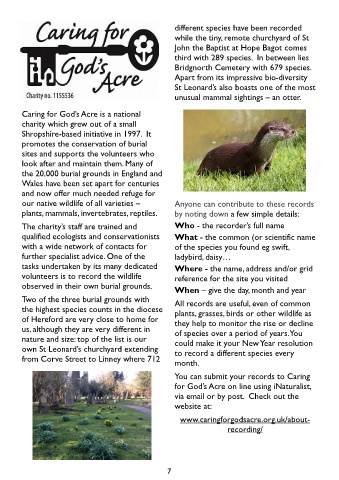
                                                              St Leonard’s also boasts one of the most
                                                              unusual mammal sightings – an otter.


         Caring for God’s Acre is a national
         charity which grew out of a small
         Shropshire-based initiative in 1997.  It
         promotes the conservation of burial
         sites and supports the volunteers who

         look after and maintain them. Many of
         the 20,000 burial grounds in England and
         Wales have been set apart for centuries
         and now offer much needed refuge for
         our native wildlife of all varieties –               Anyone can contribute to these records

         plants, mammals, invertebrates, reptiles.            by noting down a few simple details:
         The charity’s staff are trained and                  Who - the recorder’s full name

         qualified ecologists and conservationists            What - the common (or scientific name
         with a wide network of contacts for                  of the species you found eg swift,
         further specialist advice. One of the                ladybird, daisy…
         tasks undertaken by its many dedicated               Where - the name, address and/or grid
         volunteers is to record the wildlife                 reference for the site you visited

         observed in their own burial grounds.                When – give the day, month and year
         Two of the three burial grounds with                 All records are useful, even of common

         the highest species counts in the diocese            plants, grasses, birds or other wildlife as
         of Hereford are very close to home for               they help to monitor the rise or decline
         us, although they are very different in              of species over a period of years. You
         nature and size: top of the list is our              could make it your New Year resolution
         own St Leonard’s churchyard extending                to record a different species every

         from Corve Street to Linney where 712
                                                              month.
                                                              You can submit your records to Caring

                                                              for God’s Acre on line using iNaturalist,
                                                              via email or by post.  Check out the
                                                              website at:

                                                                www.caringforgodsacre.org.uk/about-
                                                                                 recording/


                                                            7

