


Page 1131 - (ISC)² CISSP Certified Information Systems Security Professional Official Study Guide
P. 1131
One of the most common implementations of segregation of duties
               policies is ensuring that security duties are separate from other duties

               within an organization. In other words, personnel responsible for
               auditing, monitoring, and reviewing security do not have other
               operational duties related to what they are auditing, monitoring, and
               reviewing. Whenever security duties are combined with other
               operational duties, individuals can use their security privileges to
               cover up activities related to their operational duties.

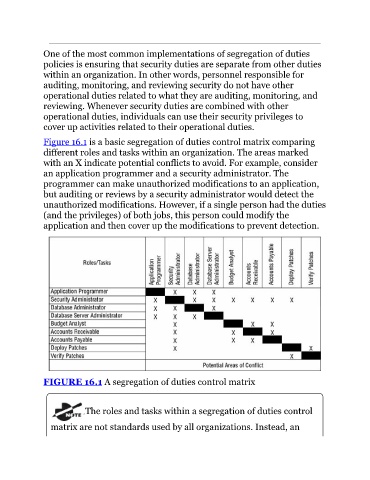
               Figure 16.1 is a basic segregation of duties control matrix comparing

               different roles and tasks within an organization. The areas marked
               with an X indicate potential conflicts to avoid. For example, consider
               an application programmer and a security administrator. The
               programmer can make unauthorized modifications to an application,
               but auditing or reviews by a security administrator would detect the
               unauthorized modifications. However, if a single person had the duties

               (and the privileges) of both jobs, this person could modify the
               application and then cover up the modifications to prevent detection.


               FIGURE 16.1 A segregation of duties control matrix


                             The roles and tasks within a segregation of duties control

                  matrix are not standards used by all organizations. Instead, an

