


Page 1301 - (ISC)² CISSP Certified Information Systems Security Professional Official Study Guide
P. 1301
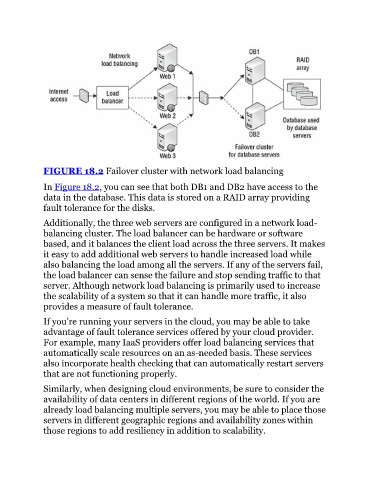
FIGURE 18.2 Failover cluster with network load balancing


               In Figure 18.2, you can see that both DB1 and DB2 have access to the
               data in the database. This data is stored on a RAID array providing
               fault tolerance for the disks.

               Additionally, the three web servers are configured in a network load-
               balancing cluster. The load balancer can be hardware or software

               based, and it balances the client load across the three servers. It makes
               it easy to add additional web servers to handle increased load while
               also balancing the load among all the servers. If any of the servers fail,
               the load balancer can sense the failure and stop sending traffic to that
               server. Although network load balancing is primarily used to increase
               the scalability of a system so that it can handle more traffic, it also
               provides a measure of fault tolerance.


               If you’re running your servers in the cloud, you may be able to take
               advantage of fault tolerance services offered by your cloud provider.
               For example, many IaaS providers offer load balancing services that
               automatically scale resources on an as-needed basis. These services
               also incorporate health checking that can automatically restart servers
               that are not functioning properly.

               Similarly, when designing cloud environments, be sure to consider the

               availability of data centers in different regions of the world. If you are
               already load balancing multiple servers, you may be able to place those
               servers in different geographic regions and availability zones within
               those regions to add resiliency in addition to scalability.

