


Page 560 - (ISC)² CISSP Certified Information Systems Security Professional Official Study Guide
P. 560
configuration, installing device drivers, or modifying security settings.
               Basically, any function not occurring in the user mode (ring 3) or

               problem state takes place in the supervisory mode.

               Stopped When a process finishes or must be terminated (because an
               error occurs, a required resource is not available, or a resource request
               can’t be met), it goes into a stopped state. At this point, the operating
               system can recover all memory and other resources allocated to the
               process and reuse them for other processes as needed.

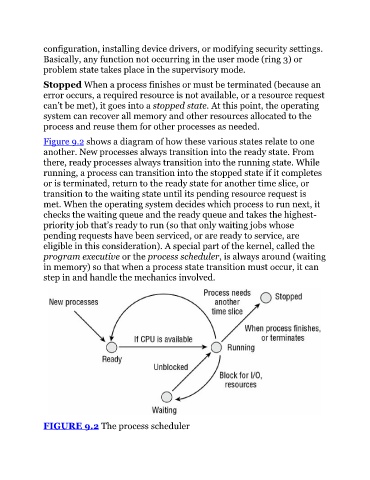
               Figure 9.2 shows a diagram of how these various states relate to one
               another. New processes always transition into the ready state. From

               there, ready processes always transition into the running state. While
               running, a process can transition into the stopped state if it completes
               or is terminated, return to the ready state for another time slice, or
               transition to the waiting state until its pending resource request is
               met. When the operating system decides which process to run next, it

               checks the waiting queue and the ready queue and takes the highest-
               priority job that’s ready to run (so that only waiting jobs whose
               pending requests have been serviced, or are ready to service, are
               eligible in this consideration). A special part of the kernel, called the
               program executive or the process scheduler, is always around (waiting
               in memory) so that when a process state transition must occur, it can
               step in and handle the mechanics involved.


               FIGURE 9.2 The process scheduler

