


Page 6 - Basic Principles of Textile Coloration
P. 6
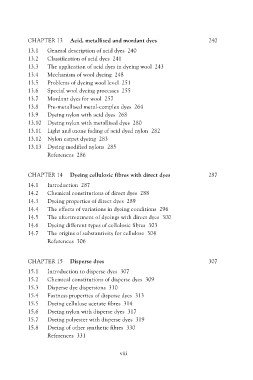
CHAPTER 13 Acid, metallised and mordant dyes             240

13.1   General description of acid dyes 240              287
13.2   Classification of acid dyes 241                   307
13.3   The application of acid dyes in dyeing wool 243
13.4   Mechanism of wool dyeing 248
13.5   Problems of dyeing wool level 251
13.6   Special wool dyeing processes 255
13.7   Mordant dyes for wool 257
13.8   Pre-metallised metal-complex dyes 264
13.9   Dyeing nylon with acid dyes 268
13.10  Dyeing nylon with metallised dyes 280
13.11  Light and ozone fading of acid dyed nylon 282
13.12  Nylon carpet dyeing 283
13.13  Dyeing modified nylons 285
       References 286

CHAPTER 14 Dyeing cellulosic fibres with direct dyes

14.1 Introduction 287
14.2 Chemical constitutions of direct dyes 288
14.3 Dyeing properties of direct dyes 289
14.4 The effects of variations in dyeing conditions 296
14.5 The aftertreatment of dyeings with direct dyes 300
14.6 Dyeing different types of cellulosic fibres 303
14.7 The origins of substantivity for cellulose 304

          References 306

CHAPTER 15 Disperse dyes

15.1 Introduction to disperse dyes 307
15.2 Chemical constitutions of disperse dyes 309
15.3 Disperse dye dispersions 310
15.4 Fastness properties of disperse dyes 313
15.5 Dyeing cellulose acetate fibres 314
15.6 Dyeing nylon with disperse dyes 317
15.7 Dyeing polyester with disperse dyes 319
15.8 Dyeing of other synthetic fibres 330

          References 331

                                                viii

