


Page 27 - SCIENCE DLP T6 SK (SEMAKAN 2017)
P. 27
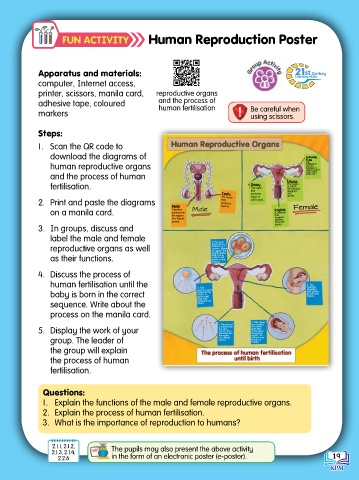
Human Reproduction Poster
Apparatus and materials:
computer, Internet access,
printer, scissors, manila card, reproductive organs
adhesive tape, coloured and the process of
human fertilisation
markers Be careful when
using scissors.
Steps:
1. Scan the QR code to
download the diagrams of Fallopian
Tube
The
human reproductive organs fertilisation
process
between a
sperm and an
ovum takes
and the process of human place here.
Uterus
fertilisation. Ovary The organ
in which
The organ
that the embryo
develops
Testis produces and
The organ ‘eggs’ or grows.
that
2. Print and paste the diagrams produces ova (ovum).
Penis sperms.
on a manila card. Transfers Vagina
sperms into
A channel
the vagina
that
of a female receives
sperms
parent. from the
3. In groups, discuss and penis.
label the male and female
3. The ovum
that has been
reproductive organs as well fertilised by a
sperm is known
as zygote. The
zygote divides
itself to form
as their functions. multiple cells
known as the
embryo.
4. Discuss the process of
human fertilisation until the 4. The
2. The embryo
sperms swim develops
and grows
baby is born in the correct towards the to become
ovum. A
foetus.
sperm will
fuse and
sequence. Write about the fertilised the
ovum.
process on the manila card.
5. After about
1. The penis of nine months,
a male parent
the mother
5. Display the work of your transfers gives birth
to the foetus
sperms from
the testes into
vagina. The
the vagina through the
group. The leader of of a female foetus is now
known as
parent.
a baby.
the group will explain
the process of human
fertilisation.
Questions:
1. Explain the functions of the male and female reproductive organs.
2. Explain the process of human fertilisation.
3. What is the importance of reproduction to humans?
2.1.1, 2.1.2, The pupils may also present the above activity
2.1.3, 2.1.4,
2.2.6 in the form of an electronic poster (e-poster). 19
8.2.6
8.2.7
8.2.6
8.2.7

