


Page 307 - fbkCardioDiabetes_2017
P. 307
Role  of  Nerve Conduction  Study                                     283

                                                  in Diabetic Patients


                 •  Small-fiber neuropathy                          Treatment related        Neuropathy of ketoaci-
                 •  Autonomic neuropathy                                                     dosis
                                                                                             Neuropathy of chronic
                 •  Large-fiber sensory neuropathy                                           renal failure
                                                                                             Neuropathy associated
                 Focal and Asymmetrical Neuropathies                                         with large vessel ischemia
                                                                                             Insulin neuritis Hyperinsu-
                 •  Cranial neuropathy (single or multiple)                                  lin neuropathy
                 •  Truncal neuropathy (thoracic radiculopathy)
                                                                    Features of Diabetic Neuropathy
                 •  Limb mononeuropathy (single or multiple)
                                                                    •  Common  complication  affecting up to 50% pa-
                 •  Proximal motor neuropathy (lumbosacral radiculo-  tients with Diabetes mellitus.
                   plexopathy, amyotrophy)
                                                                    •  Frequently asymptomatic
                                                                    •   Requires careful examination/assessment to de-
                                                                      tect .
                                                                    •  The  dermatological  assessment  should initially
                                                                      include a global inspection,(interdigitally also), for
                                                                      the presence  of  ulceration or  areas  of  abnormal
                                                                      erythema. The presence of callus (particularly with
                                                                      haemorrhage), nail dystrophy, ingrown toe nail or
                                                                      paronychia should be  recorded,  Focal or  global
                                                                      skin  temperature differences between one foot
                                                                      and the other may be predictive of either vascular
                                                                      disease or Cellulitis associated with or without ul-
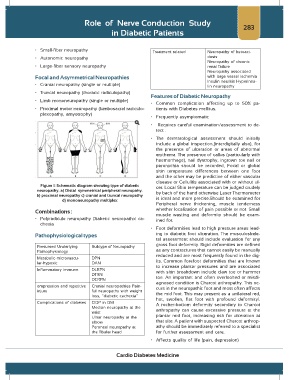
                   Figure 1: Schematic diagram showing type of diabetic   cer. Local Skin temperature can be judged crudely
                 neuropathy. a) Distal  symmetrical peripheral neuropahy.   by back of the hand otherwise Laser Thermometer
                 b) proximal neuropathy c) cranial and truncal neuropathy
                            d) mononeuropathy multiplex               is ideal and more precise.Should be examined for
                                                                      Peripheral  nerve  thickening, muscle tenderness
                 Combinations :                                       whether localization of pain possible or not. Small
                                                                      muscle wasting and deformity  should be exam-
                 •  Polyradiculo  neuropathy Diabetic  neuropathic ca-  ined for.
                   chexia
                                                                    •  Foot deformities lead to high pressure areas lead-
                 Pathophysiological types                             ing to diabetic foot ulceration. The musculoskele-
                                                                      tal assessment should include evaluation  for  any
                                                                      gross foot deformity. Rigid deformities are defined
                 Presumed Underlying     Subtype of Neuropathy
                 Pathophysiology                                      as any contractures that cannot easily be manually
                                                                      reduced and are most frequently found in the dig-
                 Metabolic-microvascu-   DPN
                 lar-hypoxic             DAN                          its. Common forefoot  deformities  that  are  known
                                                                      to increase  plantar pressures  and are  associated
                 Inflammatory immune     DLRPN                        with skin breakdown include claw toe or hammer
                                         DTRN
                                         DCRPN                        toe. An important  and  often  overlooked or misdi-
                                                                      agnosed condition is Charcot arthropathy. This oc-
                 ompression and repetitive   Cranial neuropathies Pain-  curs in the neuropathic foot and most often affects
                 injury                  ful neuropathy with weight   the mid foot. This may present as a unilateral red,
                                         loss, “diabetic cachexia”
                                                                      hot, swollen,  flat foot with  profound  deformity1.
                 Complications of diabetes  CIDP in DM                A  rocker-bottom deformity  secondary to Charcot
                                         Median neuropathy at the     arthropathy can cause excessive  pressure  at the
                                         wrist
                                         Ulnar neuropathy at the      plantar  mid foot, increasing  risk  for  ulceration at
                                         elbow                        that site. A patient with suspected Charcot arthrop-
                                         Peroneal neuropathy at       athy should be immediately referred to a specialist
                                         the fibular head             for further assessment and care.
                                                                    •  Affects quality of life (pain, depression)


                                                    Cardio Diabetes Medicine

