


Page 216 - A Mind For Numbers: How to Excel at Math and Science
P. 216
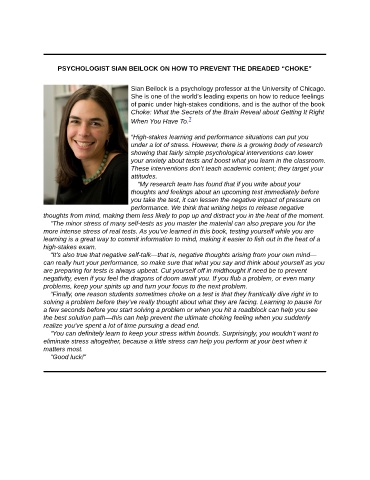
PSYCHOLOGIST SIAN BEILOCK ON HOW TO PREVENT THE DREADED “CHOKE”


                                            Sian Beilock is a psychology professor at the University of Chicago.
                                            She is one of the world’s leading experts on how to reduce feelings
                                            of panic under high-stakes conditions, and is the author of the book
                                            Choke: What the Secrets of the Brain Reveal about Getting It Right
                                            When You Have To.  7

                                            “High-stakes learning and performance situations can put you
                                            under a lot of stress. However, there is a growing body of research
                                            showing that fairly simple psychological interventions can lower
                                            your anxiety about tests and boost what you learn in the classroom.
                                            These interventions don’t teach academic content; they target your
                                            attitudes.
                                               “My research team has found that if you write about your
                                            thoughts and feelings about an upcoming test immediately before
                                            you take the test, it can lessen the negative impact of pressure on
                                            performance. We think that writing helps to release negative
               thoughts from mind, making them less likely to pop up and distract you in the heat of the moment.
                  “The minor stress of many self-tests as you master the material can also prepare you for the
               more intense stress of real tests. As you’ve learned in this book, testing yourself while you are
               learning is a great way to commit information to mind, making it easier to fish out in the heat of a
               high-stakes exam.
                  “It’s also true that negative self-talk—that is, negative thoughts arising from your own mind—
               can really hurt your performance, so make sure that what you say and think about yourself as you
               are preparing for tests is always upbeat. Cut yourself off in midthought if need be to prevent
               negativity, even if you feel the dragons of doom await you. If you flub a problem, or even many
               problems, keep your spirits up and turn your focus to the next problem.
                  “Finally, one reason students sometimes choke on a test is that they frantically dive right in to
               solving a problem before they’ve really thought about what they are facing. Learning to pause for
               a few seconds before you start solving a problem or when you hit a roadblock can help you see
               the best solution path—this can help prevent the ultimate choking feeling when you suddenly
               realize you’ve spent a lot of time pursuing a dead end.
                  “You can definitely learn to keep your stress within bounds. Surprisingly, you wouldn’t want to
               eliminate stress altogether, because a little stress can help you perform at your best when it
               matters most.
                  “Good luck!”

