


Page 55 - Physics Form 5 KSSM_Neat
P. 55
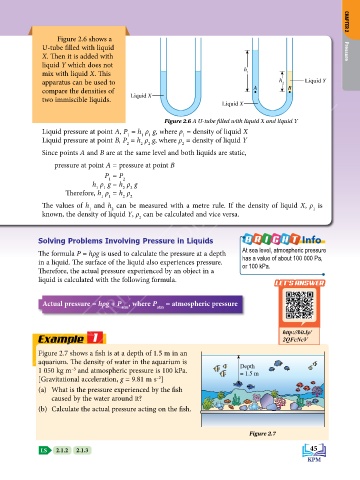
Figure 2.6 shows a                                                                     CHAPTER 2
              U-tube filled with liquid
              X. Then it is added with                                                                   Pressure
              liquid Y which does not
              mix with liquid X. This                                     h 1
              apparatus can be used to                                               h 2     Liquid Y
              KEMENTERIAN PENDIDIKAN MALAYSIA
              compare the densities of                                       A         B
              two immiscible liquids.   Liquid X
                                                                    Liquid X

                                                  Figure 2.6 A U-tube filled with liquid X and liquid Y
              Liquid pressure at point A, P  = h  ρ  g, where ρ  = density of liquid X
                                                        1
                                              1
                                       1
                                           1
              Liquid pressure at point B, P  = h  ρ  g, where ρ  = density of liquid Y
                                             2
                                       2
                                           2
                                                        2
              Since points A and B are at the same level and both liquids are static,
                 pressure at point A = pressure at point B
                                P  = P 2
                                  1
                             h  ρ  g = h  ρ  g
                              1
                                      2
                                        2
                                1
                     Therefore, h  ρ  = h  ρ
                               1  1   2  2
              The values of  h  and  h  can be measured with a metre rule. If the density of liquid  X,  ρ  is
                            1
                                                                                               1
                                  2
              known, the density of liquid Y, ρ  can be calculated and vice versa.
                                           2
             Solving Problems Involving Pressure in Liquids                                 Info
             The formula P = hρg is used to calculate the pressure at a depth   At sea level, atmospheric pressure
             in a liquid. The surface of the liquid also experiences pressure.   has a value of about 100 000 Pa,
                                                                          or 100 kPa.
             Therefore, the actual pressure experienced by an object in a
             liquid is calculated with the following formula.
                                                                                    LET’S ANSWER
                                                                                    LET’S ANSWER
              Actual pressure = hρg + P , where P  = atmospheric pressure
                                     atm        atm
                                                                                      http://bit.ly/
             Example         1                                                        2QFcNcV
             Figure 2.7 shows a fish is at a depth of 1.5 m in an
             aquarium. The density of water in the aquarium is
             1 050 kg m  and atmospheric pressure is 100 kPa.            Depth
                      –3
                                                                         = 1.5 m
             [Gravitational acceleration, g = 9.81 m s ]
                                                –2
             (a)  What is the pressure experienced by the fish
                caused by the water around it?
             (b)  Calculate the actual pressure acting on the fish.


                                                                            Figure 2.7

             LS   2.1.2  2.1.3                                                                45

