


Page 184 - Psychology of Wounds and Wound Care in Clinical Practice ( PDFDrive )
P. 184
Negative Pressure Wound Therapy  159

            90
                                                     Least pain
           80
           70
           60
              Most pain
           50
           40
           30
           20
           10
            0
             Removal of foam Removal of dressing Application of suction Application of foam  Removal of gauze Application of gauze  Cleaning Immediately after NPWT  During NPWT Application of dressing


                            % clinicians reporting minimal/no pain
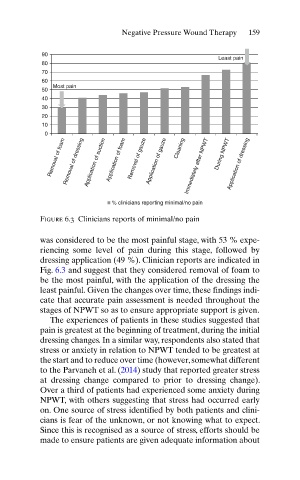
             Figure 6.3     Clinicians reports of minimal/no pain


           was considered to be the most painful stage, with 53 % expe-
           riencing some level of pain during this stage, followed by
           dressing application (49 %). Clinician reports are indicated in
           Fig.   6.3  and suggest that they considered removal of foam to
           be the most painful, with the application of the dressing the
           least painful. Given the changes over time, these findings indi-
           cate that accurate pain assessment is needed throughout the
           stages of NPWT so as to ensure appropriate support is given.
                   The experiences of patients in these studies suggested that
           pain is greatest at the beginning of treatment, during the initial
           dressing changes. In a similar way, respondents also stated that
           stress or anxiety in relation to NPWT tended to be greatest at
           the start and to reduce over time (however, somewhat different
           to the Parvaneh et al. (  2014 ) study that reported greater stress
           at dressing change compared to prior to dressing change).
           Over a third of patients had experienced some anxiety during
           NPWT, with others suggesting that stress had occurred early
           on. One source of stress identified by both patients and clini-
           cians is fear of the unknown, or not knowing what to expect.
           Since this is recognised as a source of stress, efforts should be
           made to ensure patients are given adequate information about

