


Page 108 - ACCCN's Critical Care Nursing
P. 108
Ethical Issues in Critical Care 85


                                           Clinical deterioration/non-response to
                                           treatment or patient’s desire to limit treatment


                                                                                Patient preferences
                           Ethical principles    Discussion                     Decision-making capacity?
                           Beneficence                                          YES: Informed consent
                           Non-maleficence                      Assessment      NO: Proxy consent
                           Autonomy                                             • best interests
                           Justice                                              • substituted judgment
                                                                                • advance directives

                                                        Disclosure


                           Contextual features
                           Family members                                         Quality of life
                           Laws                                                   Determined by patient
                           Administrative issues                                    (subjective)
                           Cost of care                                           Determined by others
                           Just allocation resources                                (objective)


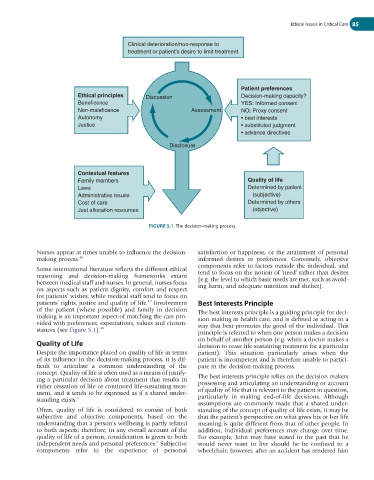
                                                  FIGURE 5.1  The decision-making process.


             Nurses appear at times unable to influence the decision-  satisfaction or happiness, or the attainment of personal
             making process. 46                                   informed  desires  or  preferences.  Conversely,  objective
                                                                  components refer to factors outside the individual, and
             Some international literature reflects the different ethical
             reasoning  and  decision-making  frameworks  extant   tend to focus on the notion of ‘need’ rather than desires
             between medical staff and nurses. In general, nurses focus   (e.g. the level to which basic needs are met, such as avoid-
             on aspects such as patient dignity, comfort and respect   ing harm, and adequate nutrition and shelter).
             for patients’ wishes, while medical staff tend to focus on
             patients’ rights, justice and quality of life.  Involvement   Best Interests Principle
                                                 47
             of  the  patient  (where  possible)  and  family  in  decision   The best interests principle is a guiding principle for deci-
             making is an important aspect of matching the care pro-  sion making in health care, and is defined as acting in a
             vided with preferences, expectations, values and circum-  way that best promotes the good of the individual. This
             stances (see Figure 5.1). 48
                                                                  principle is referred to when one person makes a decision
             Quality of Life                                      on behalf of another person (e.g. when a doctor makes a
                                                                  decision to cease life-sustaining treatment for a particular
             Despite the importance placed on quality of life in terms   patient).  This  situation  particularly  arises  when  the
             of its influence in the decision-making process, it is dif-  patient is incompetent and is therefore unable to partici-
             ficult  to  articulate  a  common  understanding  of  the   pate in the decision-making process.
             concept. Quality of life is often used as a means of justify-
             ing a particular decision about treatment that results in   The best interests principle relies on the decision makers
             either cessation of life or continued life-sustaining treat-  possessing and articulating an understanding or account
             ment, and it tends to be expressed as if a shared under-  of quality of life that is relevant to the patient in question,
             standing exists. 4                                   particularly  in  making  end-of-life  decisions.  Although
                                                                  assumptions are commonly made that a shared under-
             Often,  quality  of  life  is  considered  to  consist  of  both   standing of the concept of quality of life exists, it may be
             subjective  and  objective  components,  based  on  the   that the patient’s perspective on what gives his or her life
             understanding that a person’s wellbeing is partly related   meaning is quite different from that of other people. In
             to both aspects; therefore, in any overall account of the   addition, individual preferences may change over time.
             quality of life of a person, consideration is given to both   For  example,  John  may  have  stated  in  the  past  that  he
                                                    9
             independent needs and personal preferences.  Subjective   would  never  want  to  live  should  he  be  confined  to  a
             components  refer  to  the  experience  of  personal   wheelchair; however, after an accident has rendered him

