


Page 407 - ACCCN's Critical Care Nursing
P. 407
384  P R I N C I P L E S   A N D   P R A C T I C E   O F   C R I T I C A L   C A R E


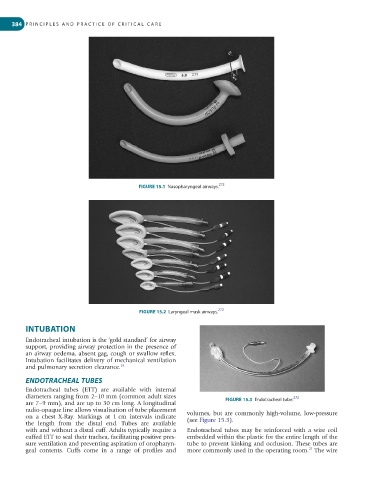
                                              FIGURE 15.1  Nasopharyngeal airways. 272


                                               FIGURE 15.2  Laryngeal mask airways. 272

         INTUBATION

         Endotracheal intubation is the ‘gold standard’ for airway
         support, providing airway protection in the presence of
         an airway oedema, absent gag, cough or swallow reflex.
         Intubation facilitates delivery of mechanical ventilation
         and pulmonary secretion clearance. 16

         ENDOTRACHEAL TUBES
         Endotracheal  tubes  (ETT)  are  available  with  internal
         diameters ranging from 2–10 mm (common adult sizes                                      272
         are 7–9 mm), and are up to 30 cm long. A longitudinal             FIGURE 15.3  Endotracheal tube.
         radio-opaque line allows visualisation of tube placement   volumes, but are commonly high-volume, low-pressure
         on  a  chest  X-Ray.  Markings  at  1 cm  intervals  indicate     (see Figure 15.3).
         the  length  from  the  distal  end.  Tubes  are  available
         with and without a distal cuff. Adults typically require a   Endotracheal  tubes  may  be  reinforced  with  a  wire  coil
         cuffed ETT to seal their trachea, facilitating positive pres-  embedded within the plastic for the entire length of the
         sure ventilation and preventing aspiration of oropharyn-  tube to prevent kinking and occlusion. These tubes are
                                                                                                      21
         geal  contents.  Cuffs  come  in  a  range  of  profiles  and     more commonly used in the operating room.  The wire

