


Page 1756 - Hematology_ Basic Principles and Practice ( PDFDrive )
P. 1756
1560   Part IX  Cell-Based Therapies


                              Ciclosporin
                              Prednisolone
                              Methylprednisolone
                              PUVA
                              Infliximab and
                              daclizumab
                                                  MSC            MSC
                                      400        2 × 10 /kg    1 × 10 /kg    Bilirubin  25
                                                                   6
                                                     6
                                     Bilirubin concentration (mmol/L)  250            15  Number of stools per day
                                      350
                                                                                      20
                                                                             Stools
                                      300
                                      200
                                                                                      10
                                      150
                                      100
                                                                                      5
                                       50
                                        0
                                           0  30  60  90  120 150 180 210 240 270 300  0
                                                         Days after ASCT
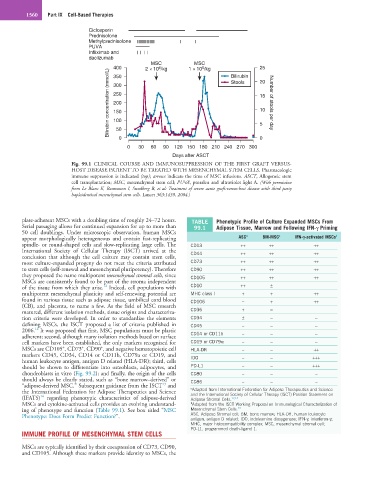
                        Fig.  99.1  CLINICAL  COURSE  AND  IMMUNOSUPPRESSION  OF THE  FIRST  GRAFT VERSUS-
                        HOST DISEASE PATIENT TO BE TREATED WITH MESENCHYMAL STEM CELLS. Pharmacologic
                        immune suppression is indicated (top); arrows indicate the time of MSC infusions. ASCT, Allogeneic stem
                        cell transplantation; MSC, mesenchymal stem cell; PUVA, psoralen and ultraviolet light A. (With permission
                        from Le Blanc K, Rasmusson I, Sundberg B, et al: Treatment of severe acute graft-versus-host disease with third party
                        haploidentical mesenchymal stem cells. Lancet 363:1439, 2004.)


        plate-adherent MSCs with a doubling time of roughly 24–72 hours.   TABLE   Phenotypic Profile of Culture Expanded MSCs From
        Serial passaging allows for continued expansion for up to more than   99.1  Adipose Tissue, Marrow and Following IFN-γ Priming
        50  cell  doublings.  Under  microscopic  observation,  human  MSCs
        appear  morphologically  heterogeneous  and  contain  fast-replicating   ASC a  BM-MSC a  IFN-γ-activated MSCs b
        spindle- or round-shaped cells and slow-replicating large cells. The   CD13  ++  ++             ++
        International  Society  of  Cellular  Therapy  (ISCT)  arrived  at  the   CD44  ++  ++          ++
        conclusion  that  although  the  cell  culture  may  contain  stem  cells,
        most culture-expanded progeny do not meet the criteria attributed   CD73  ++     ++             ++
        to stem cells (self-renewal and mesenchymal pluripotency). Therefore   CD90  ++  ++             ++
        they proposed the name multipotent mesenchymal stromal cells, since   CD105  ++  ++             ++
        MSCs are consistently found to be part of the stroma independent
                                   12
        of the tissue from which they arise.  Indeed, cell populations with   CD10  ++   ±
        multipotent mesenchymal plasticity and self-renewing potential are   MHC class I  +  +          ++
        found in various tissue such as adipose tissue, umbilical cord blood   CD106  −  +              ++
        (CB),  and  placenta,  to  name  a  few.  As  the  field  of  MSC  research
        matured, different isolation methods, tissue origins and characteriza-  CD36  +  −
        tion  criteria  were  developed.  In  order  to  standardize  the  elements   CD34  ±  −        −
        defining  MSCs,  the  ISCT  proposed  a  list  of  criteria  published  in   CD45  −  −         −
            12
        2006.  It was proposed that first, MSC populations must be plastic      −        −              −
        adherent; second, although many isolation methods based on surface   CD14 or CD11b
        cell markers have been established, the only markers recognized for   CD19 or CD79α  −  −       −
                      +
                            +
                                  +
        MSCs are CD105 , CD73 , CD90 , and negative hematopoietic cell   HLA-DR  −       −              ++
        markers  CD45,  CD34,  CD14  or  CD11b,  CD79a  or  CD19,  and   IDO    −        −             +++
        human leukocyte antigen, antigen D related (HLA-DR); third, cells
        should  be  shown  to  differentiate  into  osteoblasts,  adipocytes,  and   PD-L1  −  −       +++
        chondroblasts in vitro (Fig. 99.2); and finally, the origin of the cells   CD80  −  −           −
        should always be clearly stated, such as “bone marrow–derived” or   CD86  −      −              −
                                                      13
        “adipose-derived MSC.” Subsequent guidance from the ISCT  and   a
                                                                Adapted from International Federation for Adipose Therapeutics and Science
        the International Federation for Adipose Therapeutics and Science   and the International Society of Cellular Therapy (ISCT) Position Statement on
              14
        (IFATS)   regarding  phenotypic  characteristics  of  adipose-derived   Adipose Stromal Cells. 12,14
        MSCs and cytokine-activated cells provides an evolving understand-  b Adapted from the ISCT Working Proposal on Immunological Characterization of
        ing of phenotype and function (Table 99.1). See box titled “MSC   Mesenchymal Stem Cells. 13
        Phenotype: Does Form Predict Function?”.               ASC, Adipose Stromal cell; BM, bone marrow; HLA-DR, human leukocyte
                                                               antigen, antigen D related; IDO, indoleamine dioxygenase; IFN-γ, interferon-γ;
                                                               MHC, major histocompatibility complex; MSC, mesenchymal stromal cell;
                                                               PD-L1, programmed death-ligand 1.
        IMMUNE PROFILE OF MESENCHYMAL STEM CELLS
        MSCs are typically identified by their coexpression of CD73, CD90,
        and CD105. Although these markers provide identity to MSCs, the

