


Page 1757 - Hematology_ Basic Principles and Practice ( PDFDrive )
P. 1757
Chapter 99  Mesenchymal Stromal Cells  1561


                                                                  CD105         CD45          CD34


                                                         Cell Counts  CD73      CD11b         CD19


                                                                  CD90           CD3         HLA-DR


                                                                      Log Fluorescence Intensity
                                    MSCs


                                 Osteoblasts                 Adipocytes               Chondroblasts

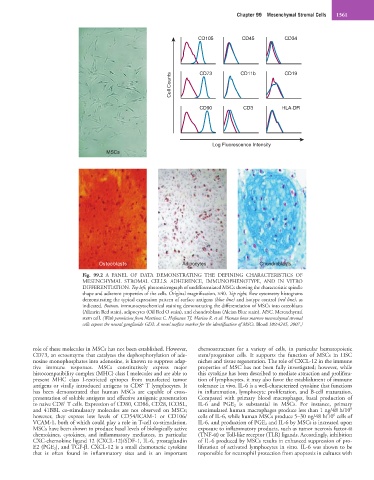
                            Fig.  99.2  A  PANEL  OF  DATA  DEMONSTRATING  THE  DEFINING  CHARACTERISTICS  OF
                            MESENCHYMAL  STROMAL  CELLS:  ADHERENCE,  IMMUNOPHENOTYPE,  AND  IN  VITRO
                            DIFFERENTIATION. Top left, photomicrograph of undifferentiated MSCs showing the characteristic spindle
                            shape and adherent properties of the cells. Original magnification, ×40. Top right, flow cytometry histograms
                            demonstrating the typical expression pattern of surface antigens (blue line) and isotype control (red line), as
                            indicated. Bottom, immunocytochemical staining demonstrating the differentiation of MSCs into osteoblasts
                            (Alizarin Red stain), adipocytes (Oil Red O stain), and chondroblasts (Alcian Blue stain). MSC, Mesenchymal
                            stem cell. (With permission from Martinez C, Hofmann TJ, Marino R, et al: Human bone marrow mesenchymal stromal
                            cells express the neural ganglioside GD2: A novel surface marker for the identification of MSCs. Blood 109:4245, 2007.)


            role of these molecules in MSCs has not been established. However,   chemoattractant  for  a  variety  of  cells,  in  particular  hematopoietic
            CD73, an ectoenzyme that catalyzes the dephosphorylation of ade-  stem/progenitor  cells.  It  supports  the  function  of  MSCs  in  HSC
            nosine monophosphates into adenosine, is known to suppress adap-  niches and tissue regeneration. The role of CXCL-12 in the immune
            tive  immune  responses.  MSCs  constitutively  express  major   properties of MSC has not been fully investigated; however, while
            histocompatibility complex (MHC) class I molecules and are able to   this cytokine has been described to mediate attraction and prolifera-
            present  MHC  class  I-restricted  epitopes  from  transfected  tumor   tion of lymphocytes, it may also favor the establishment of immune
                                               +
            antigens or virally introduced antigens to CD8  T lymphocytes. It   tolerance in vivo. IL-6 is a well-characterized cytokine that functions
            has  been  demonstrated  that  human  MSCs  are  capable  of  cross-  in  inflammation,  lymphocyte  proliferation,  and  B-cell  maturation.
            presentation of soluble antigens and effective antigenic presentation   Compared  with  primary  blood  macrophages,  basal  production  of
                      +
            to naive CD8  T cells. Expression of CD80, CD86, CD28, ICOSL,   IL-6  and  PGE 2  is  substantial  in  MSCs.  For  instance,  primary
                                                                                                                    6
            and  41BBL  co-stimulatory  molecules  are  not  observed  on  MSCs;   unstimulated human macrophages produce less than 1 ng/48 h/10
                                                                                                              6
            however,  they  express  low  levels  of  CD54/ICAM-1  or  CD106/  cells of IL-6, while human MSCs produce 5–30 ng/48 h/10  cells of
            VCAM-1, both of which could play a role in T-cell co-stimulation.   IL-6, and production of PGE 2 and IL-6 by MSCs is increased upon
            MSCs have been shown to produce basal levels of biologically active   exposure to inflammatory products, such as tumor necrosis factor-α
            chemokines,  cytokines,  and  inflammatory  mediators,  in  particular   (TNF-α) or Toll-like receptor (TLR) ligands. Accordingly, inhibition
            CXC-chemokine ligand 12 (CXCL-12)/SDF-1, IL-6, prostaglandin   of IL-6 produced by MSCs results in enhanced suppression of pro-
            E2 (PGE 2), and TGF-β. CXCL-12 is a small chemotactic cytokine   liferation of activated lymphocytes in vitro. IL-6 was shown to be
            that  is  often  found  in  inflammatory  sites  and  is  an  important   responsible for neutrophil protection from apoptosis in cultures with

