


Page 1121 - Williams Hematology ( PDFDrive )
P. 1121
1096           Part VIII:  Monocytes and Macrophages                                                                                                                      Chapter 70:  Monocytosis and Monocytopenia             1097


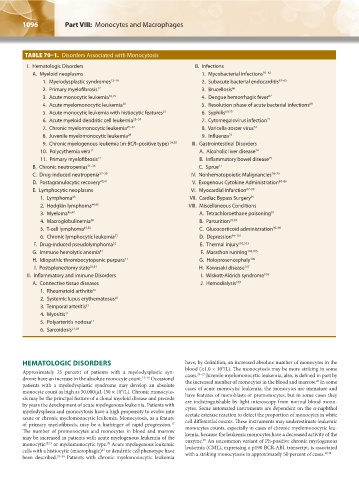
                TABLE 70–1.  Disorders Associated with Monocytosis
                 I.  Hematologic Disorders                               B.  Infections
                   A.  Myeloid neoplasms                                    1.  Mycobacterial infections 59–62
                      1.  Myelodysplastic syndromes 12–16                   2.  Subacute bacterial endocarditis 63–65
                      2.  Primary myelofibrosis 17                          3.  Brucellosis 66
                      3.  Acute monocytic leukemia 18,19                    4.  Dengue hemorrhagic fever 67
                      4.  Acute myelomonocytic leukemia 20                  5.  Resolution phase of acute bacterial infections 68
                      5.  Acute monocytic leukemia with histiocytic features 21  6.  Syphilis 69,70
                      6.  Acute myeloid dendritic cell leukemia 22–24       7.  Cytomegalovirus infection 71
                      7.  Chronic myelomonocytic leukemia 25–27             8.  Varicella-zoster virus 72
                      8.  Juvenile myelomonocytic leukemia 28               9.  Influenza 73
                      9.  Chronic myelogenous leukemia (m-BCR–positive type)  29,30  III.  Gastrointestinal Disorders
                     10.  Polycythemia vera 11                             A.  Alcoholic liver disease 74
                     11.  Primary myelofibrosis 17                         B.  Inflammatory bowel disease 75
                   B.  Chronic neutropenias 31–36                          C.  Sprue 11
                   C.  Drug-induced neutropenia 37–39                   IV.  Nonhematopoietic Malignancies 76–79
                   D.  Postagranulocytic recovery 40,41                 V.  Exogenous Cytokine Administration 80–86
                   E.  Lymphocytic neoplasms                            VI.  Myocardial Infarction 87–90
                     1.  Lymphoma 43                                    VII.  Cardiac Bypass Surgery 91
                     2.  Hodgkin lymphoma 44,45                        VIII.  Miscellaneous Conditions
                     3.  Myeloma 46,47                                     A.  Tetrachloroethane poisoning 92
                     4.  Macroglobulinemia 48                              B.  Parturition 93,94
                     5.  T-cell lymphoma 49,50                             C.  Glucocorticoid administration 95–98
                     6.  Chronic lymphocytic leukemia 51                   D.  Depression 99–101
                   F.  Drug-induced pseudolymphoma 52                      E.  Thermal injury 102,103
                   G.  Immune hemolytic anemia 11                          F.  Marathon running 104,105
                   H.  Idiopathic thrombocytopenic purpura 11              G.  Holoprosencephaly 106
                   I.  Postsplenectomy state 53,54                         H.  Kawasaki disease 107
                 II.  Inflammatory and Immune Disorders                    I.  Wiskott-Aldrich syndrome 108
                   A.  Connective tissue diseases                          J.  Hemodialysis 109
                     1.  Rheumatoid arthritis 55
                     2.  Systemic lupus erythematosus 56
                     3.  Temporal arteritis 11
                     4.  Myositis 11
                     5.  Polyarteritis nodosa 11
                     6.  Sarcoidosis 57,58


               HEMATOLOGIC DISORDERS                                  have, by definition, an increased absolute number of monocytes in the
                                                                      blood (≥1.0 × 10 /L). The monocytosis may be more striking in some
                                                                                  9
               Approximately 25  percent of  patients  with a myelodysplastic syn-  cases. 25–27  Juvenile myelomonocytic leukemia, also, is defined in part by
               drome have an increase in the absolute monocyte count. 12–16  Occasional   the increased number of monocytes in the blood and marrow.  In some
                                                                                                                  28
               patients with a  myelodysplastic  syndrome may develop an absolute   cases of acute monocytic leukemia, the monocytes are immature and
               monocyte count as high as 30,000/μL (30 × 10 /L). Chronic monocyto-  have features of monoblasts or promonocytes, but in some cases they
                                                 9
               sis may be the principal feature of a clonal myeloid disease and precede   are indistinguishable by light microscopy from normal blood mono-
               by years the development of acute myelogenous leukemia. Patients with   cytes. Some automated instruments are dependent on the α-naphthol
               myelodysplasia and monocytosis have a high propensity to evolve into   acetate esterase reaction to detect the proportion of monocytes in white
               acute or chronic myelomonocytic leukemia. Monocytosis, as a feature   cell differential counts. These instruments may underestimate leukemic
                                                                 17
               of primary myelofibrosis, may be a harbinger of rapid progression.    monocytes counts, especially in cases of chronic myelomonocytic leu-
               The number of promonocytes and monocytes in blood and marrow   kemia, because the leukemic monocytes have a decreased activity of the
               may be increased in patients with acute myelogenous leukemia of the   enzyme.  An uncommon variant of Ph-positive chronic myelogenous
                                                                            25
               monocytic 18,19  or myelomonocytic type.  Acute myelogenous leukemic   leukemia (CML), expressing a p190 BCR-ABL transcript, is associated
                                            20
               cells with a histiocytic (macrophagic)  or dendritic cell phenotype have   with a striking monocytosis in approximately 50 percent of cases. 29,30
                                          21
               been described. 22–24  Patients with chronic myelomonocytic leukemia


          Kaushansky_chapter 70_p1095-1100.indd   1096                                                                  9/18/15   9:49 AM

