


Page 1430 - Williams Hematology ( PDFDrive )
P. 1430
1404 Part X: Malignant Myeloid Diseases Chapter 88: Acute Myelogenous Leukemia 1405
933
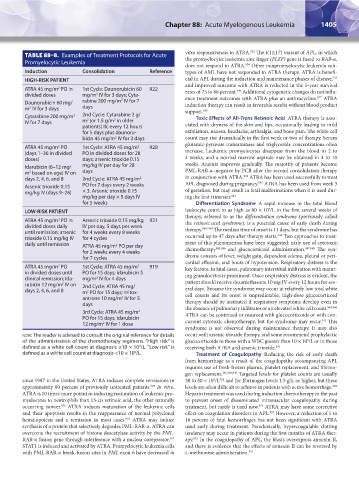
TABLE 88–8. Examples of Treatment Protocols for Acute vitro responsiveness to ATRA. The t(11;17) variant of APL, in which
the promyelocytic leukemia zinc finger (PLZF) gene is fused to RAR-α,
Promyelocytic Leukemia
does not respond to ATRA. Other nonpromyelocytic leukemia sub-
934
Induction Consolidation Reference types of AML have not responded to ATRA therapy. ATRA is benefi-
935
HIGH-RISK PATIENT cial in APL during the induction and maintenance phases of disease,
and improved outcome with ATRA is reflected in the 5-year survival
ATRA 45 mg/m PO in 1st Cycle: Daunorubicin 60 922 rates of 75 to 80 percent. Additional cytogenetic changes do not influ-
2
936
divided doses mg/m IV for 3 days; Cyta- ence treatment outcomes with ATRA plus an anthracycline. ATRA
2
937
2
Daunorubicin 60 mg/ rabine 200 mg/m IV for 7 induction therapy can result in favorable results without blood product
m IV for 3 days days support. 938
2
Cytarabine 200 mg/m 2nd Cycle: Cytarabine 2 g/ Toxic Effects of All-Trans Retinoic Acid ATRA therapy is asso-
2
2
2
IV for 7 days m (or 1.5 g/m in older
patients) IV, every 12 hours ciated with dryness of the skin and lips, occasionally leading to mild
for 5 days plus daunoru- exfoliation, nausea, headache, arthralgia, and bone pain. The white cell
bicin 45 mg/m IV for 3 days count may rise dramatically in the first week or two of therapy. Serum
2
glutamic-pyruvate transaminase and triglyceride concentrations often
ATRA 45 mg/m PO 1st Cycle: ATRA 45 mg/m 928
2
2
(days 1–36 in divided PO in divided doses for 28 increase. Leukemic promyelocytes disappear from the blood in 2 to
doses) days; arsenic trioxide 0.15 4 weeks, and a normal marrow aspirate may be obtained in 4 to 10
Idarubicin (6–12 mg/ mg/kg IV per day for 28 weeks. Anemia improves gradually. The majority of patients become
m based on age) IV on days PML-RAR-α–negative by PCR after the second consolidation therapy
2
939
days 2, 4, 6, and 8 2nd Cycle: ATRA 45 mg/m 2 in conjunction with ATRA. ATRA has been used successfully to treat
940
Arsenic trioxide 0.15 PO for 7 days every 2 weeks APL diagnosed during pregnancy. ATRA has been used from week 3
mg/kg IV (days 9–26) × 3. Arsenic trioxide 0.15 of gestation, but may result in fetal malformations when it is used dur-
mg/kg per day × 5 days IV ing the first trimester. 941
for 5 weeks Differentiation Syndrome A rapid increase in the total blood
9
LOW-RISK PATIENT leukocyte count to as high as 80 × 10 /L in the first several weeks of
therapy, referred to as the differentiation syndrome (previously called
ATRA 45 mg/m PO in Arsenic trioxide 0.15 mg/kg 921 the retinoic acid syndrome), is a potential cause of early death during
2
divided doses daily IV per day, 5 days per week 942–944
until remission; arsenic for 4 weeks every 8 weeks therapy. The median time of onset is 11 days, but the syndrome has
944
trioxide 0.15 mg/kg IV for 4 cycles occurred up to 47 days after therapy starts. Two approaches to treat-
daily until remission ATRA 45 mg/m PO per day ment of this phenomenon have been suggested: early use of cytotoxic
2
for 2 weeks every 4 weeks chemotherapy 945,946 and glucocorticoid administration. 947,948 The syn-
for 7 cycles drome consists of fever, weight gain, dependent edema, pleural or peri-
cardial effusion, and bouts of hypotension. Respiratory distress is the
ATRA 45 mg/m PO 1st Cycle: ATRA 45 mg/m 919 key feature. In fatal cases, pulmonary interstitial infiltration with matur-
2
2
in divided doses until PO for 15 days; idarubicin 5 ing granulocytes is prominent. Once respiratory distress is evident, the
clinical remission; Ida- mg/m IV for 4 days
2
rubicin 12 mg/m IV on 2nd Cycle: ATRA 45 mg/ patient should receive dexamethasone 10 mg IV every 12 hours for sev-
2
days 2, 4, 6, and 8 m PO for 15 days; mitox- eral days. Because the syndrome may occur at relatively low total white
2
antrone 10 mg/m IV for 5 cell counts and its onset is unpredictable, high-dose glucocorticoid
2
days therapy should be instituted if respiratory symptoms develop even in
942,946
3rd Cycle: ATRA 45 mg/m 2 the absence of pulmonary infiltrates or an elevated white cell count.
ATRA can be continued or resumed with glucocorticoids or with con-
PO for 15 days; idarubicin 942
12 mg/m IV for 1 dose current cytotoxic chemotherapy, but the syndrome may recur. This
2
syndrome is not observed during maintenance therapy. It may also
note: The reader is advised to consult the original reference for details occur with arsenic trioxide therapy, and some recommend prophylactic
of the administration of the chemotherapy regimens. “High risk” is glucocorticoids in those with a WBC greater than 10 × 10 /L or in those
9
defined as a white cell count at diagnosis ≥10 × 10 /L. “Low risk” is receiving both ATRA and arsenic trioxide. 943
9
defined as a white cell count at diagnosis <10 × 10 /L. Treatment of Coagulopathy Reducing the risk of early death
9
from hemorrhage as a result of the coagulopathy accompanying APL
requires use of fresh-frozen plasma, platelet replacement, and fibrino-
gen replacement. 489,490,949 Targeted levels for platelet counts are usually
since 1987 in the United States. ATRA induces complete remissions in 30 to 50 × 10 /L and for fibrinogen levels 1.5 g/L or higher, but these
9
928
950
929
approximately 80 percent of previously untreated patients. In vitro, levels are often difficult to achieve in patients with active hemorrhage.
ATRA is 10 times more potent in inducing maturation of leukemic pro- Heparin treatment was used during induction chemotherapy in the past
myelocytes to neutrophils than 13-cis retinoic acid, the other naturally to prevent onset of disseminated intravascular coagulopathy during
951
occurring isomer. ATRA induces maturation of the leukemic cells treatment, but rarely is used now. ATRA may have some corrective
930
952
and their apoptosis results in the reappearance of normal polyclonal effect on coagulation disorders in APL. However, a reduction of 5 to
931
hematopoiesis and a remission in most cases. ATRA may induce 10 percent of fatal hemorrhages has not been significant with ATRA
synthesis of a protein that selectively degrades PML-RAR-α. ATRA can used early during treatment. Paradoxically, hypercoagulable clotting
overcome the recruitment of histone deacetylase activity by the PML- tendency may occur in patients during the first months of ATRA ther-
932
RAR-α fusion gene through interference with a nuclear corepressor. apy. In the coagulopathy of APL, the blasts overexpress annexin II,
931
STAT1 is induced and activated by ATRA. Promyelocytic leukemia cells and there is evidence that the effects of annexin II can be reversed by
with PML-RAR-α break-fusion sites in PML exon 6 have decreased in l-methionine administration. 953
Kaushansky_chapter 88_p1373-1436.indd 1405 9/21/15 11:02 AM

