


Page 413 - Williams Hematology ( PDFDrive )
P. 413
388            Part V:  Therapeutic Principles                                                                                                    Chapter 24:  Treatment of Infections in the Immunocompromised Host               389


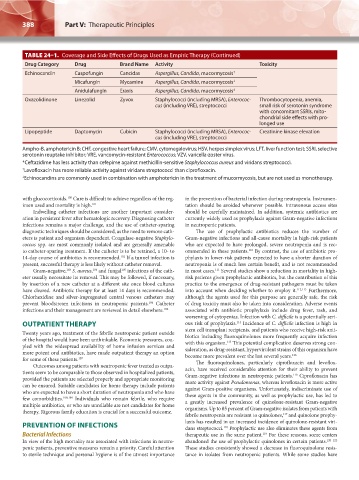
                TABLE 24–1.  Coverage and Side Effects of Drugs Used as Empiric Therapy (Continued)
                Drug Category    Drug           Brand Name  Activity                           Toxicity
                Echinocandin     Caspofungin    Cancidas    Aspergillus, Candida, mucormycosis ‡
                                 Micafungin     Mycamine    Aspergillus, Candida, mucormycosis ‡
                                 Anidulafungin  Eraxis      Aspergillus, Candida, mucormycosis ‡
                Oxazolidinone    Linezolid      Zyvox       Staphylococci (including MRSA), Enterococ-  Thrombocytopenia, anemia,
                                                            cus (including VRE), streptococci  small risk of serotonin syndrome
                                                                                               with concomitant SSRIs, mito-
                                                                                               chondrial side effects with pro-
                                                                                               longed use
                Lipopeptide      Daptomycin     Cubicin     Staphylococci (including MRSA), Enterococ-  Creatinine kinase elevation
                                                            cus (including VRE), streptococci

               Ampho-B, amphotericin B; CHF, congestive heart failure; CMV, cytomegalovirus; HSV, herpes simplex virus; LFT, liver function test; SSRI, selective
               serotonin reuptake inhibitor; VRE, vancomycin-resistant Enterococcus; VZV, varicella-zoster virus.
               *Ceftazidime has less activity than cefepime against methicillin-sensitive Staphylococcus aureus and viridans streptococci.
               † Levofloxacin has more reliable activity against viridans streptococci than ciprofloxacin.
               ‡ Echinocandins are commonly used in combination with amphotericin in the treatment of mucormycosis, but are not used as monotherapy.


               with glucocorticoids.  Cure is difficult to achieve regardless of the reg-  in the prevention of bacterial infection during neutropenia. Instrumen-
                              100
               imen used and mortality is high. 101                   tation should be avoided whenever possible. Intravenous access sites
                   Indwelling catheter infections are another important consider-  should be carefully maintained.  In addition, systemic  antibiotics  are
               ation in persistent fever after hematologic recovery. Diagnosing catheter   currently widely used as prophylaxis against Gram-negative infections
               infections remains a major challenge, and the use of catheter-sparing   in neutropenic patients.
               diagnostic techniques should be considered, as the need to remove cath-  The use  of prophylactic antibiotics  reduces the  number  of
               eters is patient and organism dependent. Coagulase-negative Staphylo-  Gram-negative infections and all-cause mortality in high-risk patients
               coccus spp. are most commonly isolated and are generally amenable   who are expected to have prolonged, severe neutropenia and is rec-
               to catheter-sparing treatment. If the catheter is to be retained, a 10- to   ommended in these patients.  By contrast, the use of antibiotic pro-
                                                                                           110
               14-day course of antibiotics is recommended.  If a tunnel infection is   phylaxis in lower-risk patients expected to have a shorter duration of
                                                102
               present, successful therapy is less likely without catheter removal.  neutropenia is of much less certain benefit, and is not recommended
                                                                                111
                              103
                                       104
                                                 105
                   Gram-negative,  S. aureus,  and fungal  infections of the cath-  in most cases.  Several studies show a reduction in mortality in high-
               eter usually necessitate its removal. This may be followed, if necessary,   risk patients given prophylactic antibiotics, but the contribution of this
               by insertion of a new catheter at a different site once blood cultures   practice to the emergence of drug-resistant pathogens must be taken
               have cleared. Antibiotic therapy for at least 14 days is recommended.   into account when deciding whether to employ it. 112,113  Furthermore,
               Chlorhexidine and silver-impregnated central venous catheters may   although the agents used for this purpose are generally safe, the risk
               prevent bloodstream infections in neutropenic patients.  Catheter   of drug toxicity must also be taken into consideration. Adverse events
                                                          106
               infections and their management are reviewed in detail elsewhere. 102  associated with antibiotic prophylaxis include drug fever, rash, and
                                                                      worsening of cytopenias. Infection with C. difficile is a potentially seri-
               OUTPATIENT THERAPY                                     ous risk of prophylaxis.  Incidence of C. difficile infection is high in
                                                                                       114
               Twenty years ago, treatment of the febrile neutropenic patient outside   stem cell transplant recipients, and patients who receive high-risk anti-
               of the hospital would have been unthinkable. Economic pressures, cou-  biotics including fluoroquinolones more frequently acquire infection
                                                                                    115
               pled with the widespread availability of home infusion services and   with this organism.  This potential complication deserves strong con-
               more potent oral antibiotics, have made outpatient therapy an option   sideration, as drug-resistant, hypervirulent strains of this organism have
                                                                                                          116
               for some of these patients. 107                        become more prevalent over the last several years.
                   Outcomes among patients with neutropenic fever treated as outpa-  The fluoroquinolones, particularly ciprofloxacin and levoflox-
               tients seem to be comparable to those observed in hospitalized patients,   acin,  have received  considerable  attention  for  their  ability  to  prevent
                                                                                                          110
               provided the patients are selected properly and appropriate monitoring   Gram-negative infections in neutropenic patients.  Ciprofloxacin has
               can be ensured. Suitable candidates for home therapy include patients   more activity against Pseudomonas, whereas levofloxacin is more active
               who are expected to have a short duration of neutropenia and who have   against Gram-positive organisms. Unfortunately, indiscriminate use of
               few  comorbidities. 108,109   Individuals  who  remain  febrile,  who  require   these agents in the community, as well as prophylactic use, has led to
               multiple antibiotics, or who are unreliable are not candidates for home   a greatly increased prevalence of quinolone-resistant Gram-negative
               therapy. Rigorous family education is crucial for a successful outcome.  organisms. Up to 85 percent of Gram-negative isolates from patients with
                                                                                                       117
                                                                      febrile neutropenia are resistant to quinolones,  and quinolone prophy-
               PREVENTION OF INFECTIONS                               laxis has resulted in an increased incidence of quinolone-resistant viri-
                                                                                   118
                                                                      dans streptococci.  Prophylactic use also eliminates these agents from
               Bacterial Infections                                   therapeutic use in the same patient.  For these reasons, some centers
                                                                                                119
               In view of the high mortality rate associated with infections in neutro-  abandoned the use of prophylactic quinolones in certain patients. 120–122
               penic patients, preventive measures remain a priority. Careful attention   These studies consistently showed a decrease in fluoroquinolone resis-
               to sterile technique and personal hygiene is of the utmost importance   tance in isolates from neutropenic patients. While some studies have


          Kaushansky_chapter 24_p0383-0392.indd   388                                                                   9/17/15   5:58 PM

