


Page 1244 - Clinical Immunology_ Principles and Practice ( PDFDrive )
P. 1244
1206         ParT TEN  Prevention and Therapy of Immunological Diseases


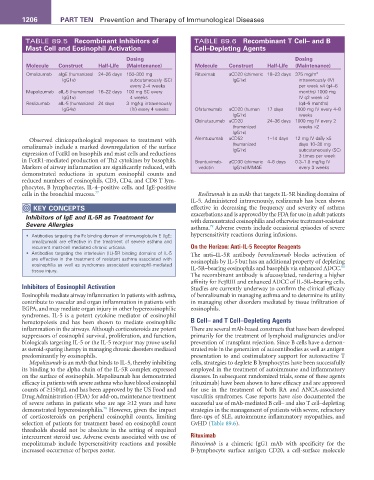
         TABLE 89.5  recombinant Inhibitors of                   TABLE 89.6  recombinant T Cell– and B
         Mast Cell and Eosinophil activation                     Cell–Depleting agents
                                          Dosing                                                  Dosing
          Molecule  Construct    Half-Life  (Maintenance)        Molecule   Construct   Half-Life  (Maintenance)
          Omalizumab  aIgE (humanized  24–26 days  150–300 mg    Rituximab  aCD20 (chimeric  18–23 days 375 mg/m   2
                     IgG1κ)                 subcutaneously (SC)              IgG1κ)                intravenously (IV)
                                            every 2–4 weeks                                        per week ×4 (q4–6
          Mepolizumab  aIL-5 (humanized  16–22 days  100 mg SC every                               months) 1000 mg
                     IgG1κ)                 4 weeks                                                IV q2 week ×2
          Reslizumab  aIL-5 (humanized  24 days  3 mg/kg intravenously                             (q4–6 months)
                     IgG4κ)                 (IV) every 4 weeks   Ofatumumab  aCD20 (human   17 days  1000 mg IV every 4–8
                                                                             IgG1κ)                weeks
                                                                 Obinutuzumab aCD20     24–36 days 1000 mg IV every 2
                                                                             (humanized            weeks ×2
                                                                             IgG1κ)
           Observed clinicopathological responses to treatment with   Alemtuzumab  aCD52   1–14 days  12 mg IV daily ×5
        omalizumab include a marked downregulation of the surface            (humanized            days 10–30 mg
                                                                             IgG1κ)
                                                                                                   subcutaneously (SC)
        expression of FcεRI on basophils and mast cells and reductions                             3 times per week
        in FcεR1-mediated production of Th2 cytokines by basophils.   Brentuximab-  aCD30 (chimeric  4–6 days  0.3–1.8 mg/kg IV
        Markers of airway inflammation are significantly reduced, with   vedotin  IgG1κ):MMAE      every 3 weeks
        demonstrated reductions in sputum eosinophil counts and
        reduced numbers of eosinophils, CD3, CD4, and CD8 T lym-
        phocytes, B lymphocytes, IL-4–positive cells, and IgE-positive
        cells in the bronchial mucosa. 77                         Reslizumab is an mAb that targets IL-5R binding domains of
                                                               IL-5. Administered intravenously, reslizumab has been shown
            KEY CONCEPTS                                       effective in decreasing the frequency and severity of asthma
         Inhibitors of IgE and IL-5R as Treatment for          exacerbations and is approved by the FDA for use in adult patients
         Severe Allergies                                      with demonstrated eosinophilia and otherwise treatment-resistant
                                                                      79
                                                               asthma.  Adverse events include occasional episodes of severe
          •  Antibodies targeting the Fc binding domain of immunoglobulin E (IgE;   hypersensitivity reactions during infusions.
           omalizumab) are effective in the treatment of severe asthma and
           recurrent mast-cell mediated chronic urticaria.     On the Horizon: Anti-IL-5 Receptor Reagents
          •  Antibodies targeting the interleukin (IL)-5R binding domains of IL-5   The anti–IL-5R antibody  benralizumab blocks activation of
           are effective in the treatment of resistant asthma associated with   eosinophils by IL-5 but has an additional property of depleting
           eosinophilia  as well as  syndromes associated eosinophil-mediated                                    80
           tissue injury.                                      IL-5R–bearing eosinophils and basophils via enhanced ADCC.
                                                               The recombinant antibody is afucosylated, rendering a higher
                                                               affinity for FcγRIII and enhanced ADCC of IL-5R–bearing cells.
        Inhibitors of Eosinophil Activation                    Studies are currently underway to confirm the clinical efficacy
        Eosinophils mediate airway inflammation in patients with asthma,   of benralizumab in managing asthma and to determine its utility
        contribute to vascular and organ inflammation in patients with   in managing other disorders mediated by tissue infiltration of
        EGPA, and may mediate organ injury in other hypereosinophilic   eosinophils.
        syndromes. IL-5 is a potent cytokine mediator of eosinophil
        hematopoiesis  and  has  been  shown  to  mediate  eosinophilic   B Cell– and T Cell–Depleting Agents
        inflammation in the airways. Although corticosteroids are potent   There are several mAb-based constructs that have been developed
        suppressors of eosinophil survival, proliferation, and function,   primarily for the treatment of lymphoid malignancies and/or
        biologicals targeting IL-5 or the IL-5 receptor may prove useful   prevention of transplant rejection. Since B cells have a demon-
        as steroid-sparing therapy in managing chronic disorders mediated   strated role in the generation of autoantibodies as well as antigen
        predominantly by eosinophils.                          presentation to and costimulatory support for autoreactive T
           Mepolizumab is an mAb that binds to IL-5, thereby inhibiting   cells, strategies to deplete B lymphocytes have been successfully
        its binding to the alpha chain of the IL-5R complex expressed   employed in the treatment of autoimmune and inflammatory
        on the surface of eosinophils. Mepolizumab has demonstrated   diseases. In subsequent randomized trials, some of these agents
        efficacy in patients with severe asthma who have blood eosinophil   (rituximab) have been shown to have efficacy and are approved
        counts of ≥150/µL and has been approved by the US Food and   for use in the  treatment  of both RA and  ANCA-associated
        Drug Administration (FDA) for add-on, maintenance treatment   vasculitis syndromes. Case reports have also documented the
        of severe asthma in patients who are age ≥12 years and have   successful use of mAb-mediated B cell– and also T cell–depleting
                                   78
        demonstrated hypereosinophilia.  However, given the impact   strategies in the management of patients with severe, refractory
        of corticosteroids on peripheral eosinophil counts, limiting   flare-ups of SLE, autoimmune inflammatory myopathies, and
        selection of patients for treatment based on eosinophil count   GvHD (Table 89.6).
        thresholds should not be absolute in the setting of required
        intercurrent steroid use. Adverse events associated with use of   Rituximab
        mepolizumab include hypersensitivity reactions and possible   Rituximab is a chimeric IgG1 mAb with specificity for the
        increased occurrence of herpes zoster.                 B-lymphocyte surface antigen CD20, a  cell-surface  molecule

