


Page 1664 - Hall et al (2015) Principles of Critical Care-McGraw-Hill
P. 1664
CHAPTER 123: Critical Care of the Burn Patient   1183


                                                          Adult burn patients (>30 kg)
                                                         Protocol for fluid resuscitation  Bar code label
                                                                                          Vitals unstable:
                                     If burn >25%:               Step one:
                                    Add hetastarch         Infuse LR at calculated rate   HR >140, <60
                                    at 20 mL/kg/24 h      per Parkland protocol (below)    BP <90/60
                                                                                                <90;
                                   Start time:________   Measure urine output after 1 hour  Sa O 2
                                                                                          Call physician
                                                   Vital signs stable:  HR <140, BP >90/60, SaO  >90
                                                                                2
                                       Urine        Urine         Urine         Urine         Urine
                                      output        output        output        output       output
                                      <15 mL       16-30 mL      31-50 mL     51-200 mL      >201 mL

                                     Increase IV   Increase IV  No change-    Decrease IV   Decrease IV
                                    rate by 20%   rate by 10%   leave IV rate  rate by 10%  rate by 20%
                                     initial rate  initial rate    as is       initial rate  initial rate


                                    If urine output                                         Urine output
                                    <15 mL/h for                                           >200 mL/h for
                                  2 consecutive hours:                                   2 consecutive hours:
                                   Call physician                                          Call physician


                                  Start hetastarch at
                                    20 mL/kg/24 h
                                    (if not started
                                     previously)


                                                         Repeat Step one every hour until:

                                                       Calculated maintenance rate is reached
                                                   40 mL + dry weight (kg) =_________ total mL/hour
                                                                                               Admit weight:______.___kg
                                                                                               Burn size:_________.___%
                                                         Once at maintenance for 2 hours,
                                                     decrease hourly by 10% of initial rate until off  Starting fluid rate:_____mL
                                                                                               Titrate by: __________mL
                                                                                                  (10% of starting IVF rate)
                                                   Continue hourly UOP for 8 hours on burns >20% or
                                                if otherwise indicated (difficult resuscitation, inhalation injury)  Maintenance IVF Rate:
                                                                                               Wt (kg) + 40 = ___ mL/h
                                                                                                 Parkland formula for
                                                         If urine output falls below 30 mL/h      fluid resuscitation
                                                        return to Step one & call physician    _____ kg × _____ × 4 =
                                                                                               (weight)     (BSAB)

                                                                                                 _______ mLs/1st24 hours

                                                                                               /2 = _______ mLs/1st8 hours
                                                       Obtain ABG, lactate, bladder pressure
                                                                                               /8 = _______ mLs/h IV rate
                                    Do not include hetastarch, tube feedings, or medication fluids as part of the resuscitation fluids—
                                                you should only titrate the LR during the resuscitation phase

                                   Place this sheet in nurse manager’s mailbox when resuscitation is complete
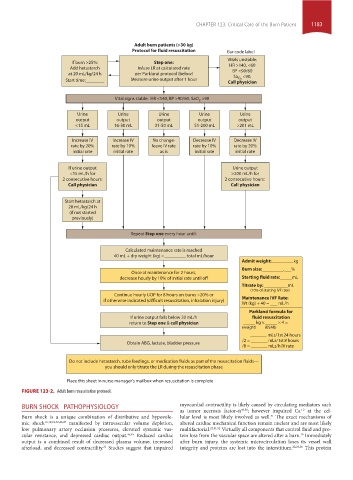
                    FIGURE 123-2.  Adult burn resuscitation protocol.

                    BURN SHOCK   PATHOPHYSIOLOGY                          myocardial contractility is likely caused by circulating mediators such
                                                                                                                   +2
                                                                          as tumor necrosis factor-α 49,50 ; however impaired Ca  at the cel-
                    Burn shock is a unique combination of distributive and hypovole-  lular level is most likely involved as well.  The exact mechanisms of
                                                                                                        51
                    mic shock 16,19,22,32,46,47  manifested by intravascular volume depletion,   altered cardiac mechanical function remain unclear and are most likely
                    low pulmonary artery occlusion pressures, elevated systemic vas-    multifactorial. 22,51,52  Virtually all components that control fluid and pro-
                    cular resistance, and  depressed  cardiac  output. 46,48  Reduced  cardiac   tein loss from the vascular space are altered after a burn.  Immediately
                                                                                                                   16
                    output is a combined result of decreased plasma volume, increased   after burn injury, the systemic microcirculation loses its vessel wall
                    afterload, and decreased contractility.  Studies suggest that impaired   integrity and proteins are lost into the interstitium. 22,25,26  This protein
                                               21


            section10.indd   1183                                                                                      1/20/2015   9:21:33 AM

