


Page 333 - HOW TO PROVE IT: A Structured Approach, Second Edition
P. 333
P1: PIG/KNL  P2: IWV/
                   0521861241c07  CB996/Velleman  October 20, 2005  1:12  0 521 86124 1  Char Count= 0


                                              Countable and Uncountable Sets           319
                            infinitely many decisions in such a way that it guarantees that the corresponding
                            restriction is satisfied? In other words, for each positive integer n, we’ll make
                            our decision about whether or not n is an element of D in such a way that it
                            will guarantee that D  = f (n). This isn’t hard to do. We can let n be an element
                            of D if n /∈ f (n), and leave n out of D if n ∈ f (n). This will guarantee that
                            D  = f (n), because one of these sets will contain n as an element and the other
                            won’t. This suggests that we should let D ={n ∈ Z | n /∈ f (n)}.
                                                                     +
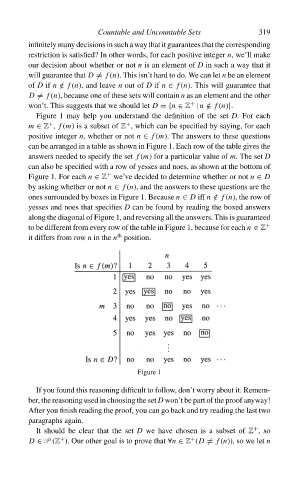
                              Figure 1 may help you understand the definition of the set D. For each
                                                     +
                                 +
                            m ∈ Z , f (m) is a subset of Z , which can be specified by saying, for each
                            positive integer n, whether or not n ∈ f (m). The answers to these questions
                            can be arranged in a table as shown in Figure 1. Each row of the table gives the
                            answers needed to specify the set f (m) for a particular value of m. The set D
                            can also be specified with a row of yesses and noes, as shown at the bottom of
                                                +
                            Figure 1. For each n ∈ Z we’ve decided to determine whether or not n ∈ D
                            by asking whether or not n ∈ f (n), and the answers to these questions are the
                            ones surrounded by boxes in Figure 1. Because n ∈ D iff n /∈ f (n), the row of
                            yesses and noes that specifies D can be found by reading the boxed answers
                            along the diagonal of Figure 1, and reversing all the answers. This is guaranteed
                            to be different from every row of the table in Figure 1, because for each n ∈ Z +
                                                   th
                            it differs from row n in the n position.


                                                        Figure 1

                              If you found this reasoning difficult to follow, don’t worry about it. Remem-
                            ber, the reasoning used in choosing the set D won’t be part of the proof anyway!
                            After you finish reading the proof, you can go back and try reading the last two
                            paragraphs again.
                                                                                     +
                              It should be clear that the set D we have chosen is a subset of Z ,so
                                    +
                                                                     +
                            D ∈ P (Z ). Our other goal is to prove that ∀n ∈ Z (D  = f (n)), so we let n

