


Page 139 - leadership-experience-2008
P. 139
CikguOnline
      CikguOnline
            120                                                                  PART 3: THE PERSONAL SIDE OF LEADERSHIP

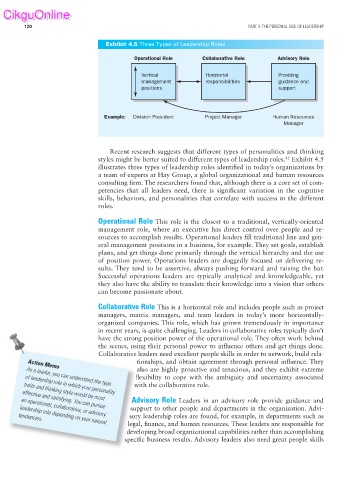
                                     Exhibit 4.5 Three Types of Leadership Roles

                                              Operational Role     Collaborative Role     Advisory Role

                                                Vertical            Horizontal             Providing
                                                management          responsibilities       guidance and
                                                positions                                  support


                                     Example:  Division President   Project Manager      Human Resources
                                                                                            Manager


                                       Recent research suggests that different types of personalities and thinking
                                                                                             42
                                   styles might be better suited to different types of leadership roles.  Exhibit 4.5
                                   illustrates three types of leadership roles identifi ed in today’s organizations by
                                   a team of experts at Hay Group, a global organizational and human resources
                                   consulting fi rm. The researchers found that, although there is a core set of com-
                                   petencies that all leaders need, there is signifi cant variation in the cognitive
                                   skills, behaviors, and personalities that correlate with success in the different
                                   roles.

                                   Operational Role This role is the closest to a traditional, vertically-oriented
                                   management role, where an executive has direct control over people and re-
                                   sources to accomplish results. Operational leaders fi ll traditional line and gen-
                                   eral management positions in a business, for example. They set goals, establish
                                   plans, and get things done primarily through the vertical hierarchy and the use
                                   of position power. Operations leaders are doggedly focused on delivering re-
                                   sults. They tend to be assertive, always pushing forward and raising the bar.
                                   Successful operations leaders are typically analytical and knowledgeable, yet
                                   they also have the ability to translate their knowledge into a vision that others
                                   can become passionate about.


                                   Collaborative Role This is a horizontal role and includes people such as project
                                   managers, matrix managers, and team leaders in today’s more horizontally-
                                   organized companies. This role, which has grown tremendously in  importance
                                   in recent years, is quite challenging. Leaders in collaborative roles typically don’t
                                   have the strong position power of the operational role. They often work behind

                                   the scenes, using their personal power to influence others and get things done.
                                   Collaborative leaders need excellent people skills in order to network, build rela-
                                               tionships, and obtain agreement through personal infl uence. They
             Action Memo
                                               also are highly proactive and tenacious, and they exhibit extreme

                                              flexibility to cope with the ambiguity and uncertainty associated
                                              with the collaborative role.
             As a leader, you can understand the type
            of leadership role in which your personality
            traits and thinking style would be most
                                             Advisory Role  Leaders in an advisory role provide guidance and
            effective and satisfying. You can pursue
                                             support to other people and departments in the organization. Advi-
           an operational, collaborative, or advisory
                                            sory leadership roles are found, for example, in departments such as
          tendencies.
           leadership role depending on your natural

                                            legal, finance, and human resources. These leaders are responsible for
                                            developing broad organizational capabilities rather than accomplishing

                                           specific business results. Advisory leaders also need great people skills

