


Page 165 - policy and procedure infection control
P. 165
Policies and Procedures on Infection Control


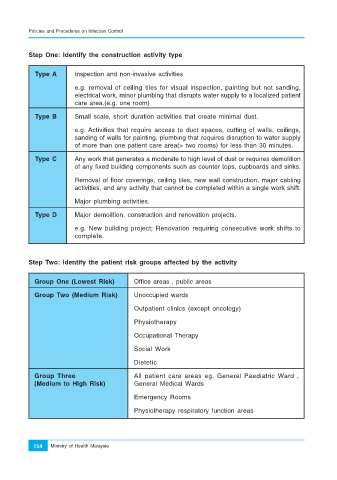
               Step One: Identify the construction activity type

                 Type A      Inspection and non-invasive activities

                             e.g. removal of ceiling tiles for visual inspection, painting but not sanding,
                             electrical work, minor plumbing that disrupts water supply to a localized patient
                             care area.(e.g. one room)
                 Type B      Small scale, short duration activities that create minimal dust.

                             e.g. Activities that require access to duct spaces, cutting of walls, ceilings,
                             sanding of walls for painting, plumbing that requires disruption to water supply
                             of more than one patient care area(> two rooms) for less than 30 minutes.
                 Type C      Any work that generates a moderate to high level of dust or requires demolition
                             of any fixed building components such as counter tops, cupboards and sinks.
                             Removal of floor coverings, ceiling tiles, new wall construction, major cabling
                             activities, and any activity that cannot be completed within a single work shift.
                             Major plumbing activities.
                 Type D      Major demolition, construction and renovation projects.

                             e.g. New building project; Renovation requiring consecutive work shifts to
                             complete.


               Step Two: Identify the patient risk groups affected by the activity


                 Group One (Lowest Risk)      Office areas , public areas
                 Group Two (Medium Risk)      Unoccupied wards

                                              Outpatient clinics (except oncology)
                                              Physiotherapy

                                              Occupational Therapy
                                              Social Work

                                              Dietetic
                 Group Three                  All patient care areas eg, General Paediatric Ward ,
                 (Medium to High Risk)        General Medical Wards
                                              Emergency Rooms

                                              Physiotherapy respiratory function areas


                 154  Ministry of Health Malaysia

