


Page 59 - Basic Course
P. 59
KNX BASIC COURSE

                  18  Taking into account higher telegram rates: IP Network


                                                                                             LAN

                                                            Router


                                                          Network ‐ Switch


                    KNXnet/                    KNXnet/                    KNXnet/
                   IP‐Router                  IP‐Router                  IP‐Router
                     1.1.0                      1.2.0                      1.3.0


                           PS/Ch                      PS/Ch                      PS/Ch


                      KNX                        KNX                        KNX
                                                      DVC
                           DVC
                                                                                 DVC
                           1.1.1                      1.2.1                      1.3.1
                           DVC                        DVC                        DVC
                           1.1.2                      1.2.2                      1.3.2

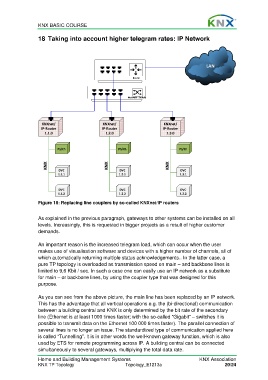
                  Figure 18: Replacing line couplers by so-called KNXnet/IP routers

                  As explained in the previous paragraph, gateways to other systems can be installed on all
                  levels. Increasingly, this is requested in bigger projects as a result of higher customer
                  demands.

                  An important reason is the increased telegram load, which can occur when the user
                  makes use of visualisation software and devices with a higher number of channels, all of
                  which automatically returning multiple status acknowledgements.. In the latter case, a
                  pure TP topology is overloaded as transmission speed on main – and backbone lines is
                  limited to 9,6 Kbit / sec. In such a case one can easily use an IP network as a substitute
                  for main – or backbone lines, by using the coupler type that was designed for this
                  purpose.

                  As you can see from the above picture, the main line has been replaced by an IP network.
                  This has the advantage that all vertical operations e.g. the (bi-directional) communication
                  between a building central and KNX is only determined by the bit rate of the secondary
                  line (Ethernet is at least 1000 times faster; with the so-called “Gigabit” – switches it is
                  possible to transmit data on the Ethernet 100 000 times faster). The parallel connection of
                  several lines is no longer an issue. The standardized type of communication applied here
                  is called “Tunnelling”. It is in other words the well-known gateway function, which is also
                  used by ETS for remote programming across IP. A building central can be connected
                  simultaneously to several gateways, multiplying the total data rate.

                  Home and Building Management Systems                                    KNX Association
                  KNX TP Topology                        Topology_E1213a                             20/24

