


Page 50 - Advanced Course
P. 50
KNX ADVANCED COURSE

                  When the heating is switched on, the system behaves as if it has a time delay. Slow
                  heating or cooling systems cannot be controlled via two-step control as it can lead to an
                  extreme overshoot and therefore a considerable loss of comfort.


                               2-step individual room controller
                               (3°hysteresis)
                        35
                        30
                        25

                     °C,  20                                                   Row 1
                     on/  15                                                   Row 2
                     off
                        10                                                     Row 3
                         5
                         0
                         7:12     7:19     7:26     7:33    7:40     7:48
                                               Time

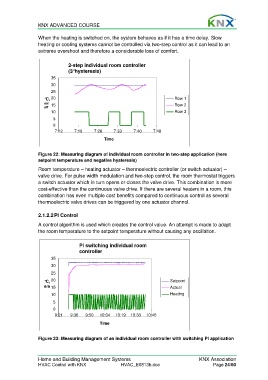
                  Figure 22: Measuring diagram of individual room controller in two-step application (here
                  setpoint temperature and negative hysteresis)
                  Room temperature – heating actuator – thermoelectric controller (or switch actuator) –
                  valve drive. For pulse width modulation and two-step control, the room thermostat triggers
                  a switch actuator which in turn opens or closes the valve drive. This combination is more
                  cost-effective than the continuous valve drive. If there are several heaters in a room, this
                  combination has even multiple cost benefits compared to continuous control as several
                  thermoelectric valve drives can be triggered by one actuator channel.


                  2.1.2.2 PI Control
                  A control algorithm is used which creates the control value. An attempt is made to adapt
                  the room temperature to the setpoint temperature without causing any oscillation.


                                    PI switching individual room
                                    controller
                        35
                        30
                        25
                     °C, 20                                                  Setpoint
                     e/a 15                                                  Actual

                        10                                                   Heating
                         5
                         0
                         9:21   9:36   9:50  10:04  10:19  10:33  10:48

                                             Time


                  Figure 23: Measuring diagram of an individual room controller with switching PI application


                  Home and Building Management Systems                                    KNX Association
                  HVAC Control with KNX                HVAC_E0813b.doc                          Page 24/60

