


Page 552 - YG 2019
P. 552
TECHNICAL TECHNICAL
DATA DATA
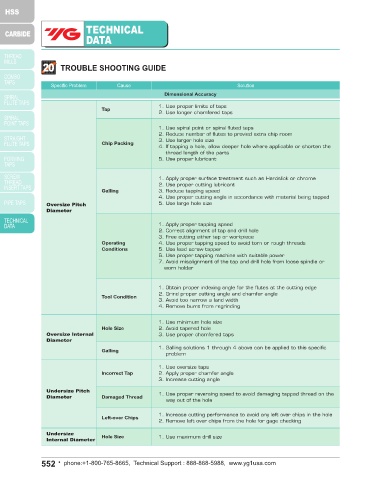
20 TROUBLE SHOOTING GUIDE Specific Problem Cause Solution
Tool Life
Specific Problem Cause Solution
1. Avoid chip packing in the flutes or the bottom of the hole.
Dimensional Accuracy Incorrect Tap Selection Use spiral pointed or spiral fluted taps or fluteless taps.
2. Apply correct surface treatment such as Hardslick or bright
1. Use proper limits of taps
Tap
2. Use longer chamfered taps
1. Use larger drill size
2. Try to shorten thread length
1. Use spiral point or spiral fluted taps Excessive Tapping 3. Increase cutting angle
2. Reduce number of flutes to provied extra chip room Torque 4. Apply a tap with more thread relief and reduced land width
3. Use larger hole size
Chip Packing 5. Apply correct surface treatment such as Hardslick
4. If tapping a hole, allow deeper hole where applicable or shorten the
thread length of the parts
5. Use proper lubricant Breakage 1. Reduce tapping speed
2. Avoid misalignment between tap and the hole and tapered hole
Operating Conditions 3. Use floating type of tapping holder
1. Apply proper surface treatment such as Hardslick or chrome 4. Use tapping holder with torque adjustment
2. Use proper cutting lubricant 5. Avoid hitting bottom of the hole with tap
Galling 3. Reduce tapping speed
4. Use proper cutting angle in accordance with material being tapped
Oversize Pitch 5. Use large hole size 1. Do not grind the bottom of the flute
Diameter Tool Condition 2. Avoid too narrow a land width
3. Remove all worn sections when regrindig the flutes
4. Regrind tool more frequently
1. Apply proper tapping speed
2. Correct alignment of tap and drill hole
3. Free cutting either tap or workpiece
Operating 4. Use proper tapping speed to avoid torn or rough threads 1. Reduce cutting angle
Conditions 5. Use lead screw tapper 2. Use a different kind of high-speed steel tap
6. Use proper tapping machine with suitable power Incorrect Tap Selection 3. Reduce hardness of the tap
4. Increase chamfer length
7. Avoid misalignment of the tap and drill hole from loose spindle or 5. Avoid chip packing in the flutes or in the bottom of the hole by using
worn holder
spiral fluted or spiral pointed taps
Chipping
1. Obtain proper indexing angle for the flutes at the cutting edge
2. Grind proper cutting angle and chamfer angle 1. Reduce tapping speed
Tool Condition 2. Avoid misalignment between tap and hole
3. Avoid too narrow a land width Wear 3. Avoid sudden return of reverse in blind hole tapping
4. Remove burrs from regrinding
4. Avoid galling
5. Use larger hole size
1. Use minimum hole size
Hole Size 2. Avoid tapered hole
Oversize Internal 3. Use proper chamfered taps 1. Apply specially designed tap for tapping heat treated materal
Diameter Incorrect Tap Selection 2. Change to a type of high-speed steel tap that contains vanadium
1. Galling solutions 1 through 4 above can be applied to this specific 3. Apply special surface treatment such as TiCN or Hardslick
Galling 4. Increase chamfer length
problem
1. Use oversize taps Wearx 1. Reduce tapping speed
Incorrect Tap 2. Apply proper chamfer angle 2. Apply proper cutting lubricants
3. Increase cutting angle Operating Conditions 3. Avoid work hardened hole
4. Use larger hole size
Undersize Pitch
Diameter Damaged Thread 1. Use proper reversing speed to avoid damaging tapped thread on the
way out of the hole Tool Condition 1. Grind proper cutting angle
2. Avoid hardness reduction from grinding process
1. Increase cutting performance to avoid any left over chips in the hole
Left-over Chips
2. Remove left over chips from the hole for gage checking Chamfer Too Short 1. Increase chamfer length
Torn or Rough
Undersize Thread
Internal Diameter Hole Size 1. Use maximum drill size Wrong Cutting Angle 1. Apply proper cutting angle
552 • phone:+1-800-765-8665, Technical Support : 888-868-5988, www.yg1usa.com phone:+1-800-765-8665, Technical Support : 888-868-5988, www.yg1usa.com • 553

