


Page 10 - History of The Quranic Text | Kalamullah.Com
P. 10
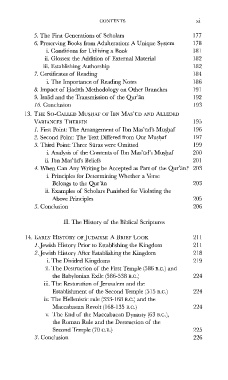
CONTENTS                          Xl

                                5. The First Generations of Scholars                   177
                                6. Preserving Books from Adulteration: A Unique System  178
                                    i. Conditions for Utilising a Book                 181
                                   ii. Glosses: the Addition of External Material      182
                                   iii. Establishing Authorship                        182
                                7. Certificates of Reading                             184
                                    i. The Importance of Reading Notes                 186
                                8. Impact of Hadith Methodology on Other Branches      191
                                9. Isnad and the Transmission of the Qur'an            192
                                10. Conclusion                                         193
                            13. THE SO-CALLED MU~I:lAF OF IBN MAS'DD AND ALLEDED
                                VARIANCES THEREIN                                      195
                                1. First Point: The Arrangement of Ibn Mas'ud's Mushaf  196
                                2. Second Point: The Text Differed from Our MU~1;af    197
                                3. Third Point: Three Suras were Omitted               199
                                    i. Analysis of the Contents of Ibn Mas'ud's Mushaf  200
                                   ii. Ibn Mas'ud's Beliefs                            201
                                4. When Can Any Writing be Accepted as Part of the Qjir'an? 203
                                    i. Principles for Determining Whether a Verse
                                      Belongs to the Qur'an                            203
                                   ii. Examples of Scholars Punished for Violating the
                                      Above Principles                                 205
                                5. Conclusion                                          206


                                          II. The History of the Biblical Scriptures

                             14. EARLY HISTORY OF JUDAISM: A BRIEF LOOK                211
                                1.Jewish History Prior to Establishing the Kingdom     211
                                2.Jewish History After Establishing the Kingdom        218
                                    i. The Divided Kingdoms                            219
                                   ii. The Destruction of the First Temple (586 B.C.) and
                                      the Babylonian Exile (586-538 s.c.)              224
                                   iii. The Restoration ofJerusalem and the
                                      Establishment of the Second Temple (515 s.c.)    224
                                   iv. The Hellenistic rule (333-168 s.o.) and the
                                      Maccabaean Revolt (168-135 B.C.)                 224
                                    v. The End of the Maccabaean Dynasty (63 B.C.),
                                      the Roman Rule and the Destruction of the
                                      Second Temple (70 C.E.)                          225
                                3. Conclusion                                          226

