


Page 306 - History of The Quranic Text | Kalamullah.Com
P. 306
286            THE HISTORY OF THE QUR'ANIC TEXT

                                  is particularly worrying, given that these manuscripts belong to the period
                                  between the 9th and the 15th centuries. Innumerable generations of Chris-
                                  tians must have lived and died without even laying eyes on a complete
                                  copy of their own Scriptures."


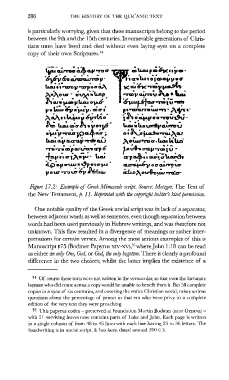
                                   Figure 17.2: Example of Greek Minuscule script. Source: Metzger; The Text of
                                  the New Testament) p. 11. Reprinted with the copyright holder's kindpermission.

                                    One notable quality of the Greek uncial script was itslack of a separator,
                                  between adjacent words as wellas sentences, even though separation between
                                  words had been used previously in Hebrew writings, and was therefore not
                                  unknown. This flaw resulted in a divergence of meanings or rather inter-
                                  pretations for certain verses. Among the most serious examples of this is
                                  Manuscript V75 (Bodmer Papyrus xrv-xvi.vwherejohn 1:18 can be read
                                  as either anonlY One) God, or God) the onlY begotten. There is clearly a profound
                                  difference in the two choices; whilst the latter implies the existence of a


                                    34 Of course these texts were not written in the vernacular, so that even the fortunate
                                  layman who did come across a copy would be unable to benefit from it. But 58 complete
                                  copies in a span of six centuries, and covering the entire Christian world, raises serious
                                  questions about the percentage of priests in that era who were privy to a complete
                                  edition of the very text they were preaching.
                                    35 This papyrus codex - preserved at Foundation Martin Bodmer (near Geneva) -
                                  with 51 surviving leaves now contains parts of Luke andJohn. Each page is written
                                  in a single column of from 38 to 45 lines with each line having 25 to 36 letters. The
                                  handwriting is in uncial script. It has been dated around 200 C.E.

