


Page 121 - Euclid's Elements of Geometry
P. 121
ST	EW      dþ.


                                    Η                                                  G    ELEMENTS BOOK 4

                             Α              Ε                                   A              E


                      Θ                           Μ                       H                          M
                                     Ζ                                                  F

                         Β                      ∆                           B                      D


                            Κ       Γ       Λ                                  K       C        L
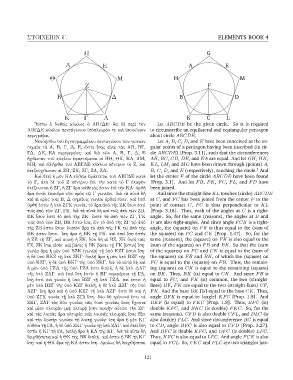
               ῎Εστω ὁ δοθεὶς κύκλος ὁ ΑΒΓΔΕ· δεῖ δὲ περὶ τὸν      Let ABCDE be the given circle. So it is required
            ΑΒΓΔΕ κύκλον πεντάγωνον ἰσόπλευρόν τε καὶ ἰσογώνιον to circumscribe an equilateral and equiangular pentagon
            περιγράψαι.                                         about circle ABCDE.
               Νενοήσθω τοῦ ἐγγεγραμμένου πενταγώνου τῶν γωνιῶν    Let A, B, C, D, and E have been conceived as the an-
            σημεῖα τὰ Α, Β, Γ, Δ, Ε, ὥστε ἴσας εἶναι τὰς ΑΒ, ΒΓ, gular points of a pentagon having been inscribed (in cir-
            ΓΔ, ΔΕ, ΕΑ περιφερείας· καὶ διὰ τῶν Α, Β, Γ, Δ, Ε   cle ABCDE) [Prop. 3.11], such that the circumferences
            ἤχθωσαν τοῦ κύκλου ἐφαπτόμεναι αἱ ΗΘ, ΘΚ, ΚΛ, ΛΜ, AB, BC, CD, DE, and EA are equal. And let GH, HK,
            ΜΗ, καὶ εἰλήφθω τοῦ ΑΒΓΔΕ κύκλου κέντρον τὸ Ζ, καὶ KL, LM, and MG have been drawn through (points) A,
                                                                                                            †
            ἐπεζεύχθωσαν αἱ ΖΒ, ΖΚ, ΖΓ, ΖΛ, ΖΔ.                 B, C, D, and E (respectively), touching the circle. And
               Καὶ ἐπεὶ ἡ μὲν ΚΛ εὐθεῖα ἐφάπτεται τοῦ ΑΒΓΔΕ κατὰ let the center F of the circle ABCDE have been found
            τὸ Γ, ἀπὸ δὲ τοῦ Ζ κέντρου ἐπὶ τὴν κατὰ τὸ Γ ἐπαφὴν [Prop. 3.1]. And let FB, FK, FC, FL, and FD have
            ἐπέζευκται ἡ ΖΓ, ἡ ΖΓ ἄρα κάθετός ἐστιν ἐπὶ τὴν ΚΛ· ὀρθὴ  been joined.
            ἄρα ἐστὶν ἑκατέρα τῶν πρὸς τῷ Γ γωνιῶν. διὰ τὰ αὐτὰ δὴ  And since the straight-line KL touches (circle) ABCDE
            καὶ αἱ πρὸς τοῖς Β, Δ σημείοις γωνίαι ὀρθαί εἰσιν. καὶ ἐπεὶ at C, and FC has been joined from the center F to the
            ὀρθή ἐστιν ἡ ὑπὸ ΖΓΚ γωνία, τὸ ἄρα ἀπὸ τῆς ΖΚ ἴσον ἐστὶ  point of contact C, FC is thus perpendicular to KL
            τοῖς ἀπὸ τῶν ΖΓ, ΓΚ. διὰ τὰ αὐτὰ δὴ καὶ τοῖς ἀπὸ τῶν ΖΒ, [Prop. 3.18]. Thus, each of the angles at C is a right-
            ΒΚ ἴσον ἐστὶ τὸ ἀπὸ τῆς ΖΚ· ὥστε τὰ ἀπὸ τῶν ΖΓ, ΓΚ angle. So, for the same (reasons), the angles at B and
            τοῖς ἀπὸ τῶν ΖΒ, ΒΚ ἐστιν ἴσα, ὧν τὸ ἀπὸ τῆς ΖΓ τῷ ἀπὸ D are also right-angles. And since angle FCK is a right-
            τῆς ΖΒ ἐστιν ἴσον· λοιπὸν ἄρα τὸ ἀπὸ τῆς ΓΚ τῷ ἀπὸ τῆς angle, the (square) on FK is thus equal to the (sum of
            ΒΚ ἐστιν ἴσον. ἴση ἄρα ἡ ΒΚ τῇ ΓΚ. καὶ ἐπεὶ ἴση ἐστὶν the squares) on FC and CK [Prop. 1.47]. So, for the
            ἡ ΖΒ τῇ ΖΓ, καὶ κοινὴ ἡ ΖΚ, δύο δὴ αἱ ΒΖ, ΖΚ δυσὶ ταῖς same (reasons), the (square) on FK is also equal to the
            ΓΖ, ΖΚ ἴσαι εἰσίν· καὶ βάσις ἡ ΒΚ βάσει τῇ ΓΚ [ἐστιν] ἴση· (sum of the squares) on FB and BK. So that the (sum
            γωνία ἄρα ἡ μὲν ὑπὸ ΒΖΚ [γωνίᾳ] τῇ ὑπὸ ΚΖΓ ἐστιν ἴση· of the squares) on FC and CK is equal to the (sum of
            ἡ δὲ ὑπὸ ΒΚΖ τῇ ὑπὸ ΖΚΓ· διπλῆ ἄρα ἡ μὲν ὑπὸ ΒΖΓ τῆς the squares) on FB and BK, of which the (square) on
            ὑπὸ ΚΖΓ, ἡ δὲ ὑπὸ ΒΚΓ τῆς ὑπὸ ΖΚΓ. διὰ τὰ αὐτὰ δὴ καὶ FC is equal to the (square) on FB. Thus, the remain-
            ἡ μὲν ὑπὸ ΓΖΔ τῆς ὑπὸ ΓΖΛ ἐστι διπλῆ, ἡ δὲ ὑπὸ ΔΛΓ  ing (square) on CK is equal to the remaining (square)
            τῆς ὑπὸ ΖΛΓ. καὶ ἐπεὶ ἴση ἐστὶν ἡ ΒΓ περιφέρεια τῇ ΓΔ, on BK. Thus, BK (is) equal to CK. And since FB is
            ἴση ἐστὶ καὶ γωνία ἡ ὑπὸ ΒΖΓ τῇ ὑπὸ ΓΖΔ. καί ἐστιν ἡ  equal to FC, and FK (is) common, the two (straight-
            μὲν ὑπὸ ΒΖΓ τῆς ὑπὸ ΚΖΓ διπλῆ, ἡ δὲ ὑπὸ ΔΖΓ τῆς ὑπὸ lines) BF, FK are equal to the two (straight-lines) CF,
            ΛΖΓ· ἴση ἄρα καὶ ἡ ὑπὸ ΚΖΓ τῇ ὑπὸ ΛΖΓ· ἐστὶ δὲ καὶ ἡ  FK. And the base BK [is] equal to the base CK. Thus,
            ὑπὸ ΖΓΚ γωνία τῇ ὑπὸ ΖΓΛ ἴση. δύο δὴ τρίγωνά ἐστι τὰ  angle BFK is equal to [angle] KFC [Prop. 1.8]. And
            ΖΚΓ, ΖΛΓ τὰς δύο γωνίας ταῖς δυσὶ γωνίαις ἴσας ἔχοντα BKF (is equal) to FKC [Prop. 1.8]. Thus, BFC (is)
            καὶ μίαν πλευρὰν μιᾷ πλευρᾷ ἴσην κοινὴν αὐτῶν τὴν ΖΓ· double KFC, and BKC (is double) FKC. So, for the
            καὶ τὰς λοιπὰς ἄρα πλευρὰς ταῖς λοιπαῖς πλευραῖς ἴσας ἕξει same (reasons), CFD is also double CFL, and DLC (is
            καὶ τὴν λοιπὴν γωνίαν τῇ λοιπῇ γωνίᾳ· ἴση ἄρα ἡ μὲν ΚΓ also double) FLC. And since circumference BC is equal
            εὐθεῖα τῇ ΓΛ, ἡ δὲ ὑπὸ ΖΚΓ γωνία τῇ ὑπὸ ΖΛΓ. καὶ ἐπεὶ ἴση to CD, angle BFC is also equal to CFD [Prop. 3.27].
            ἐστὶν ἡ ΚΓ τῇ ΓΛ, διπλῆ ἄρα ἡ ΚΛ τῆς ΚΓ. διὰ τὰ αὐτα δὴ  And BFC is double KFC, and DFC (is double) LFC.
            δειχθήσεται καὶ ἡ ΘΚ τῆς ΒΚ διπλῆ. καί ἐστιν ἡ ΒΚ τῇ ΚΓ Thus, KFC is also equal to LFC. And angle FCK is also
            ἴση· καὶ ἡ ΘΚ ἄρα τῇ ΚΛ ἐστιν ἴση. ὁμοίως δὴ δειχθήσεται equal to FCL. So, FKC and FLC are two triangles hav-

                                                             121

