


Page 277 - PGM Compendium
P. 277
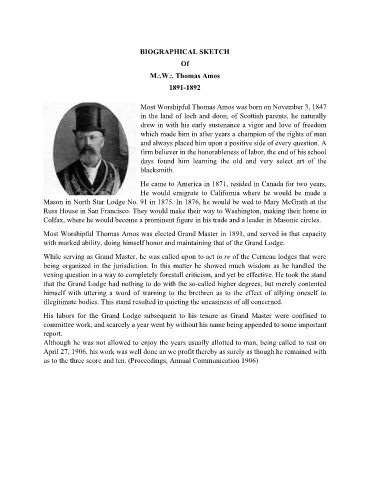
BIOGRAPHICAL SKETCH
                                                             Of
                                                   M⸫W⸫ Thomas Amos

                                                         1891-1892

                                                Most Worshipful Thomas Amos was born on November 3, 1847
                                                in the land of loch and doon, of Scottish parents, he naturally
                                                drew in with his early sustenance a vigor and love of freedom
                                                which made him in after years a champion of the rights of man
                                                and always placed him upon a positive side of every question. A
                                                firm believer in the honorableness of labor, the end of his school
                                                days found him learning the old and very select art of the
                                                blacksmith.

                                                He came to America in 1871, resided in Canada for two years.
                                                He would emigrate to California where he would be made a
               Mason in North Star Lodge No. 91 in 1875. In 1876, he would be wed to Mary McGrath at the
               Russ House in San Francisco. They would make their way to Washington, making their home in
               Colfax, where he would become a prominent figure in his trade and a leader in Masonic circles.

               Most Worshipful Thomas Amos was elected Grand Master in 1891, and served in that capacity
               with marked ability, doing himself honor and maintaining that of the Grand Lodge.

               While serving as Grand Master, he was called upon to act in re of the Cerneau lodges that were
               being organized in the jurisdiction. In this matter he showed much wisdom as he handled the
               vexing question in a way to completely forestall criticism, and yet be effective. He took the stand
               that the Grand Lodge had nothing to do with the so-called higher degrees, but merely contented
               himself with uttering a word of warning to the brethren as to the effect of allying oneself to
               illegitimate bodies. This stand resulted in quieting the uneasiness of all concerned.

               His labors for the Grand Lodge subsequent to his tenure as Grand Master were confined to
               committee work, and scarcely a year went by without his name being appended to some important
               report.
               Although he was not allowed to enjoy the years usually allotted to man, being called to rest on
               April 27, 1906, his work was well done an we profit thereby as surely as though he remained with
               us to the three score and ten. (Proceedings, Annual Communication 1906)

