


Page 10 - Thinking Critically
P. 10
2  �e����n�� ��t� � ���t����� e��e�e����n�� ��t� � ���t����� e��e  11

                    2        Reading with a critical eye


                             As with any new skills you develop, it may take some time to become
                             comfortable with thinking critically about what you read and write.
                             However, the more you practise it the better you will become. In this
             Critical thinking   section you will learn how to read using critical thinking skills.
             requires
             concentration, so
             try to find a quiet   2.1  Using enquiry-based learning
             place to study and
             do it in ‘bite-sized’   As an independent learner you must be willing to reflect on what
             chunks, giving   you are doing and how you are progressing. Asking appropriate
             yourself breaks   questions of the materials you are reading is an essential part of this.
             between.        You won’t exercise your critical thinking skills by listening or reading

                             passively. You will gain these skills only by engaging actively with
                             the subject matter. You can do this by asking appropriate questions
                             of the material, investigating solutions to any problems, creating
                             new understanding as a result and then reflecting on what you have
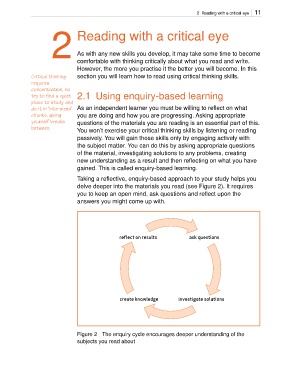
                             gained. This is called enquiry-based learning.
                             Taking a reflective, enquiry-based approach to your study helps you
                             delve deeper into the materials you read (see Figure 2). It requires
                             you to keep an open mind, ask questions and reflect upon the
                             answers you might come up with.


                                             reflect on results       ask questions


                                             create knowledge     investigate solutions


                             Figure 2  The enquiry cycle encourages deeper understanding of the
                             subjects you read about


                                                                        ����������������������
                                                                        ������  ����������������  ���  �
                                                                               ���������
                                                                        ������  ���         ����  ��������
                                                                        ���������           ����
                                                                        ������              ����
                                                                        ������  ��������    ����  ��
                                                                        �������             �������
                                                                        �����               �����

