


Page 7 - BBC Wildlife Volume 36 #02
P. 7
88 The percentage of 10km squares in Britain and Ireland C HRI S
CHRIS
where snipe were recorded in winter for the landmark
Bird Atlas 2007–2011, making them our most widespread
PACK
PACKHAM’S
wintering wader. Breeding numbers are down, however.
MUST
MUST-SEE
Q BEHAVIOUR
TOP BILLING
DON’T MISS
he collective noun for snipe is a
WINTERWATCH ‘wisp’, surely among the most
Airing on BBC Two from Tpoetic for any British bird. It
29 January to 1 February.
specifically describes snipe in flight;
you will seldom spot a tight flock of
these waders on the mud of a marsh,
floodplain or fen. As the light fades
on winter afternoons, small groups
of snipe may venture out from cover
into open water, but generally they
are birds seen feeding in ones or
twos, probing the squelchy margins
for hidden invertebrates.
Those extraordinary beaks average
7cm long. “On an inventor’s blueprint
their bill would seem unrealistically
ludicrous, like a bird with a trunk,”
wrote birder and author Tim Dee in
Four Fields (Jonathan Cape, 2013).
He described watching snipe feed “by
dipping and tip-tapping into the mud
either directly or through water. Most
tip-tapped once every five seconds,
and roughly once every three tip-taps
they got something. They would then
pull their bill halfway from the mud
or the water and draw up whatever
they had caught in little nibbling
actions.” At times, Dee noticed, the
snipes’ dipping went up to their eyes.
“Sometimes they dipped deeper still
and their heads submerged entirely.”
GET INVOLVED World Wetlands Day is
2 February: www.worldwetlandsday.org
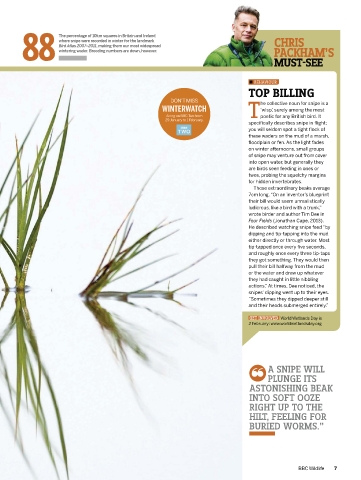
A SNIPE WILL
` PLUNGE ITS
ASTONISHING BEAK
INTO SOFT OOZE
RIGHT UP TO THE
HILT, FEELING FOR
BURIED WORMS.”
BBC Wildlife 7

