


Page 75 - DK Eyewitness Travel - Guides Ultimate Food Journeys
P. 75
COLMAR FRANCE 73
The Best Places to Eat
Tarte Flambée
La Maison Rouge inexpensive
COLMAR
A Colmar gem known for its warm welcome and
well-priced food, La Maison Rouge has been
serving up Alsatian favorites for more than
COLMAR FRANCE
30 years. In keeping with its name, there’s a
lot of red splashed around, from lamps and
Fiery Tarte Flambée in Alsace red-trimmed tablecloths to the blazing rouge
walls of the cellar dining room. It’s whispered,
however, that the name dates back to a less
cheery time, when the executioners from the
Colmar’s old town reflects a time when half-timbered houses were all the rage and you could guillotine stayed here and the red was a
reference to the blood on their hands. There’s
never have enough gables, balconies, or spires. Delightfully Alsatian in look and attitude, the
nothing to fear these days, though, and the
town is a little more German than French, and so is the food: pretzels, sausage, cabbage, and delicious food runs from bibalakas – a
rib-sticking mix of fromage blanc (soft white
tarte flambée, a satisfyingly crispy crust anointed with a rich cream and bacon topping.
cheese), chives, and garlic served with sautéed
potatoes, cheese, and ham – to the house
Colmar has both French and left-over bread dough and pop it in among the favorite of ham spit-roasted on the bone
Germanic traits in its cooking, its wood-stoked flames to check the readiness of their (jambon à l’os braisé à la broche). But locals
flock here for the four kinds of tarte flambée,
architecture, and its festivals. oven for bread-baking. Its place in the oven flames
including one garnished with goat cheese and
Full of Alsatian atmosphere, explains its name, although some like to think it’s also
basil, and a deluxe Upper Rhine version made
from its half-timbered houses to because the edges are always singed black, or flamed.
with Munster, a high-fat, full-cream-milk cheese.
its medieval alleyways, the town is a vivid reminder Pantry staples began to grace the rectangular,
9 rue des Ecoles, Colmar; open noon–2 PM and
not just of the proximity of the German border, but of ultra-thin crust: a slather of homemade cream, some 6:30–10 PM Tue–Sat; www.maison-rouge.net
the many disputes over its allegiance; it has been thinly sliced onions picked from the field, and chunks
alternately part of France and Germany many times in of home-cured bacon. In the fierce oven heat, it took Also in Colmar
its history. In the Middle Ages, Colmar was the region’s a matter of minutes to cook – the ultimate fast food. Aux Clefs de Colmar (+33 3 8923 9215;
port, and farmers were still using the canals to deliver At first the lunch of choice for just a small clutch inexpensive) serves up traditional regional
their produce to the central covered market right up of farmers in the Lower Rhine, it soon became food, from pork knuckle baked with a Munster-
cheese crust to a host of flammekueche, or as
until the 1950s. The farmers are long gone, and the emblematic of all Alsace. Towns both high and low on
they’re known here, “flams.” There’s a basic flam
area – now known as Petite Venise – features tourist the Rhine now serve up “flame tart,” or flammekueche.
of bacon, onion, and fromage blanc, several
boats, a tootling train, and quayside cafés, but still There’s even a Confrérie de la Veritable Tarte Flambée
cheese versions (with Emmental, Munster, and
something of the old-world charm remains, as the d’Alsace (Brotherhood of the Real Alsatian Flamed goat cheese), plus one with smoked salmon and
canals gently weave among the tall, ornately carved Tart) to ensure the quality of the crust dished up in another with mushrooms.
16th-century buildings. Alsatian restaurants. They insist on a certain recipe,
Also in France
It was not until the 19th century that the Alsatians cooked in a wood-fired oven, but they are open to
La Strasbourgeoise (+33 1 4205 2002;
invented their famous tart – tarte flambée – and it was variations on ingredient ratios, and even sanction a
moderate) in Paris sits appropriately opposite
more by accident than intention. The canny farm sweet version with sliced apple. In keeping with all
the Gare de l’Est, the station for trains to and
women of the Kochersberg region used to roll out their things Alsatian, a happy blend is finally what counts.
from Alsace. In place since 1950, this is a little
corner of Alsace in the French capital, from the
choucroute piled high with pork to the traditional
The Alsatian Wine Route tarte flambée, a crispy thin crust painted with
Colmar is the “capital of Alsatian wine” and part cream and specked with bacon and finely sliced
of the 106-mile (170-km) Route des Vins (Wine onion. Wash it down with a mug of Alsatian
Route). Threading through vast vineyards dotted beer or a pitcher of Riesling.
with cobblestone villages and castles, it’s easy to
Around the World
follow and a great way to explore the region. The
route runs from Marlenheim to Thann, along the Alsatian specialties litter the menu at Boston’s
eastern foothills of the Vosges mountains, and Brasserie Jo (www.brasseriejo.com;
there are more than 40 vineyards with wines to inexpensive), including tarte flambée. They
try along the way. Around 90 percent of Alsatian serve the classic – with fresh white cheese,
wine is white – Riesling, Sylvaner, Gewürztraminer,
bacon, and onions – plus two new versions that
and Pinot Gris. If you’d like to do some wine might earn the disdain of traditionalists but
tasting but don’t want to drive the wine trail, try
please the locals, with spinach, Gruyère cheese,
cellars in Colmar that are open for tastings, such
as Domaine Viticole de la Ville de Colmar (www. and garlic chips, or blue cheese and walnut.
domaineviticolecolmar.fr), Domaine Robert
Karcher et Fils (www.vins-karcher.com), or organic
wine grower Martin Jund (www.vin-bio-jund.
com), who also offers accommodations.
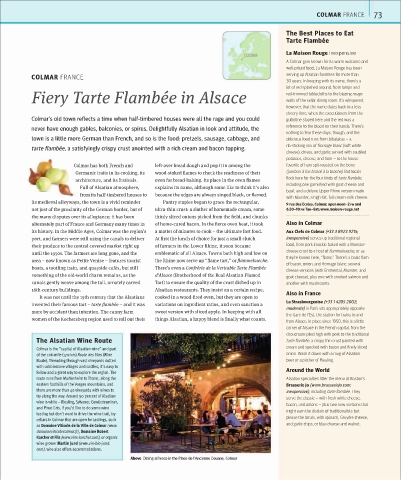
Above Dining alfresco in the Place de l’Ancienne Douane, Colmar

