


Page 174 - (DK Eyewitness) Travel Guide - Australia
P. 174
172 NE W SOUTH W ALES AND A C T
1 Blue Mountains National Park
The landscape of the Blue Mountains was more Mount Wilson
A basalt cap, the
than 250 million years in the making as sediments result of a now
built up then were eroded, revealing sheer cliff extinct volcano,
faces and canyons. Home to Aboriginal provides the
communities for an estimated 14,000 years, rich soil for the
gardens of
the rugged terrain proved, at first, a formidable this attractive
barrier to white settlers (see p174), but since the summer retreat.
1870s it has been a popular holiday resort. The
mountains get their name from the release of
oil from the eucalyptus trees which causes a
blue haze. Excellent drives and walking trails
allow for easy exploration of the region.
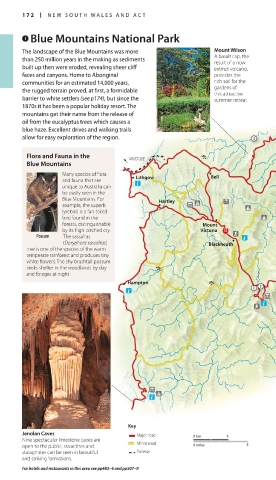
Flora and Fauna in the MUDGEE J
Blue Mountains
Many species of flora Lithgow Bell
and fauna that are
unique to Australia can
be easily seen in the
Blue Mountains. For Hartley
example, the superb
lyrebird is a fan-tailed
bird found in the
forests, distinguishable Mount
by its high-pitched cry. Victoria
Possum The sassafras
(Doryphora sassafras) Blackheath
tree is one of the species of the warm
temperate rainforest and produces tiny
white flowers. The shy brushtail possum
seeks shelter in the woodlands by day J
and forages at night.
Hampton J
Key
Jenolan Caves Major road 0 km 5
Nine spectacular limestone caves are Minor road
open to the public; stalactites and 0 miles 5
stalagmites can be seen in beautiful Railway
and striking formations.
For hotels and restaurants in this area see pp483–4 and pp507–9

