


Page 101 - (DK) Help Your Kids with Growing Up: A No-Nonsense Guide to Puberty and Adolescence
P. 101
SELF-HARM          99

        Acknowledging the problem
        Self-harm is an unhealthy coping mechanism that can be difficult to admit to other
        people. It often remains a secret because the person who is self-harming fears the
        reactions of others. Challenging stigma, and being open and non-judgemental about
        self-harm in general, will make it more likely for a person who self-harms to seek support.

          TEEN  HINTS                                      P ARENT  TIPS
          Getting help                                     Supporting your teen

          • Talk to someone you can trust, or, if you prefer to talk to   • Be aware of the behavioural signs, such as becoming isolated
           someone you don’t know, call a support helpline.   or withdrawn, changes in eating habits and weight,
                                                             depression, drinking or drug-taking, low self-esteem, or
          • Sometimes it’s easier to talk when you’re both doing   wearing long clothing or refusing to wear a swimsuit or sports
           something else, such as cooking a meal or driving. Writing a
           list or letter in advance can help you tell them exactly what   kit, in order to hide any injuries.
           you need them to know.                          • Self-harm is typically carried out secretly, so any physical signs
                                                             might not be obvious. Look for bald patches, bruises, burns,
          • Think about what you want to happen next and what support   and cuts.
           you need.
                                                           • Encourage your teen to talk, and listen calmly without passing
          • Consider seeking professional help, such as from a doctor or   judgement. Agree together what will happen next.
           school counsellor.
                                                           • Seek professional help if you feel you don’t know what to do.


           Other ways of coping                                        ▽ Finding distractions
                                                                       If talking to a safe person isn’t an
           Understanding what triggers self-harm can help when trying to find an   immediate option, there are all sorts of
           alternative coping strategy – hitting a pillow really hard might help to vent   alternative strategies to help teens cope
           anger, or doing a breathing exercise can help restore a sense of control.   with overwhelming feelings.


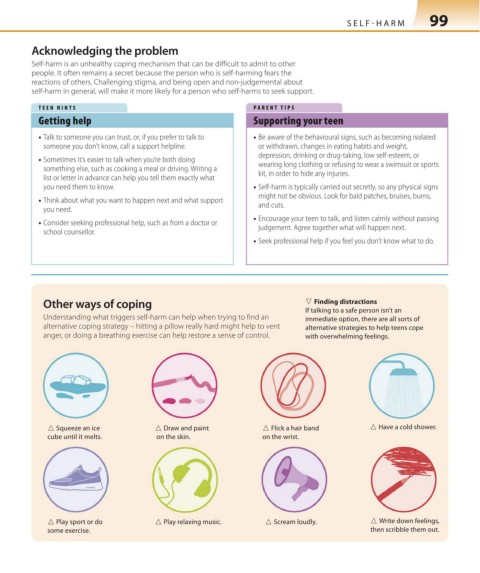
            △ Squeeze an ice         △ Draw and paint        △ Flick a hair band      △ Have a cold shower.
            cube until it melts.      on the skin.           on the wrist.


            △ Play sport or do       △ Play relaxing music.   △ Scream loudly.        △ Write down feelings,
            some exercise.                                                            then scribble them out.


   098-099_Self-harm.indd   99                                                                       24/03/2017   17:17

