


Page 35 - (DK) Help Your Kids with Growing Up: A No-Nonsense Guide to Puberty and Adolescence
P. 35
CHANGING  BOD Y           33

                                                          Puberty problems

                                                          The average age for females to start puberty is 11 years old, but
                                                          it can start at any point from 8 to 14 years old. If someone starts
                                                          puberty before the age of 8, it’s called “precocious puberty”. If
                                                          this occurs, it’s best to see a doctor to see why the body has
                                                          kickstarted puberty so early. It may lead to an early growth spurt
                                                          that also stops sooner than it should, leaving them shorter than
        Growth spurts                                     average as an adult. Similarly, if puberty occurs much later than
                                                          14 years of age, medical advice should be sought.
        Between the ages of 11 and 15 years, females grow up to
        8 cm (3 in) per year, with periods of rapid growth affecting
        different parts of the body at different times. The hands
        and feet usually grow first, followed by the arms and legs,
        with the spine and torso growing last. These differently
        timed growth rates can cause clumsiness, as the muscles   ▷ Different rates
        needed to keep teens balanced play catch up, and the   If a teen is concerned,
        part of the brain that deals with spatial awareness adjusts   about their
        to the individual’s new height and body proportions.  development
                                                          visiting a doctor
                                                          should help to
                                                          reassure them.


        Building body confidence                           TEEN  HINTS
        Feeling confident on the inside makes a big difference when   Embracing change
        a teen is dealing with the many changes taking place   • Your body lets you participate in exciting activities – focus on
        outside the body. The important thing is not to worry about   what it can do, rather than how it looks.
        what is happening to other people, because everyone
        matures differently.                               • Speak to yourself as you would speak to a friend, give yourself
                                                             compliments, and avoid putting yourself down.
                                                           • Choose clothes that make you feel good, and focus on the
                                                             parts of the body you like best.


                                                           P ARENT  TIPS
                                                           Supporting your teen

                                                           • Try to make this exciting life stage feel positive, in order to
                                                             build your teen’s self-esteem about who they are becoming.
                                                           • Providing your teen with all the information and practical stuff
                                                             they might need can help them feel better prepared to
                                                             manage the physical changes when they happen.
                                                           • If you’re embarrassed about broaching these topics,
                                                             acknowledge it to your teen – it will help your teen to see
                                                             that being honest about their body is healthy.

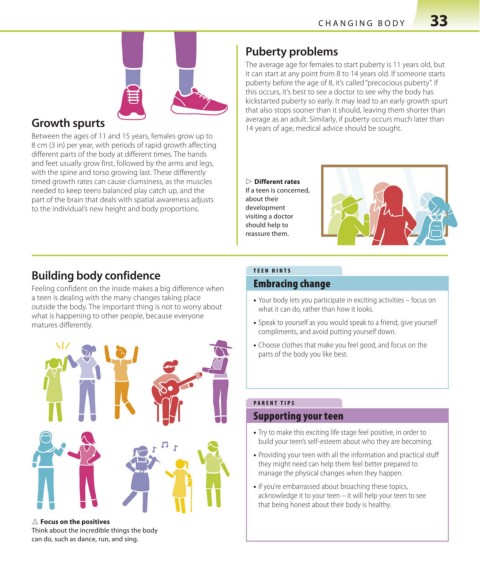
        △ Focus on the positives
        Think about the incredible things the body
        can do, such as dance, run, and sing.


   032-033_Changing_body.indd   33                                                                   24/03/2017   17:15

