


Page 96 - (DK) Super Shark Encyclopedia: And Other Creatures of the Deep
P. 96
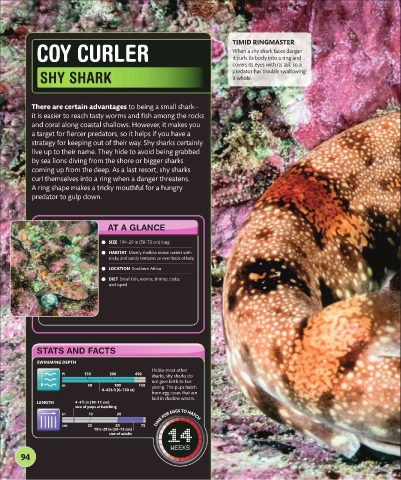
COY CURLER                                                            TIMID RINGMASTER
                                                                                    When a shy shark faces danger
                                                                                    it curls its body into a ring and
                                                                                    covers its eyes with its tail, so a
               SHY SHARK                                                            predator has trouble swallowing
                                                                                    it whole.


            There are certain advantages to being a small shark—
            it is easier to reach tasty worms and fish among the rocks
            and coral along coastal shallows. However, it makes you
            a target for fiercer predators, so it helps if you have a
            strategy for keeping out of their way. Shy sharks certainly
            live up to their name. They hide to avoid being grabbed
            by sea lions diving from the shore or bigger sharks
            coming up from the deep. As a last resort, shy sharks
            curl themselves into a ring when a danger threatens.
            A ring shape makes a tricky mouthful for a hungry
            predator to gulp down.


                                       AT A GLANCE


                                     •  SIZE  19½–29 in (50–73 cm) long
                                     •  HABITAT  Mainly shallow ocean waters with
                                        rocky and sandy bottoms or over beds of kelp
                                     •  LOCATION  Southern Africa

                                     •  DIET  Small fish, worms, shrimp, crabs,
                                        and squid


              STATS AND FACTS

              SWIMMING DEPTH
                                                       Unlike most other
                       ft      150      300      450
                                                       sharks, shy sharks do
                                                       not give birth to live
                       m        50        100     150  young. The pups hatch
                                      0–426 ft (0–130 m)
                                                       from egg cases that are
                                                       laid in shallow waters.
              LENGTH        4–4¼ in (10–11 cm)
                            size of pups at hatching
                       in        10        20
                                                         TIME FOR EGGS TO HATCH
                       cm       25        50       75
                                  19½–29 in (50–73 cm)
                                        size of adults       14

                                                              WEEKS
        94

