


Page 205 - (DK Eyewitness) Travel Guide - Japan
P. 205
and thousands of sohei, or
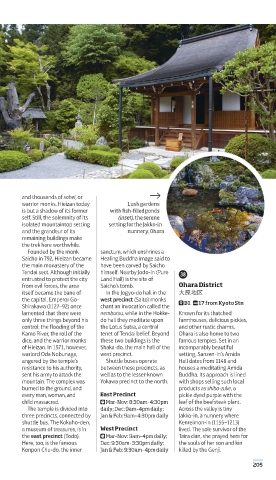
warrior monks, Hieizan today Lush gardens
is but a shadow of its former with fish-filled ponds
self. Still, the solemnity of its (inset), the serene
isolated mountaintop setting setting for the Jakko-in
and the grandeur of its nunnery, Ohara
remaining buildings make
the trek here worthwhile.
Founded by the monk sanctum, which enshrines a
Saicho in 792, Hieizan became Healing Buddha image said to
the main monastery of the have been carved by Saicho
Tendai sect. Although initially himself. Nearby Jodo-in (Pure 38
entrusted to protect the city Land Hall) is the site of
from evil forces, the area Saicho’s tomb. Ohara District
itself became the bane of In the Jogyo-do hall in the 大原地区
the capital. Emperor Go- west precinct (Saito) monks
Shirakawa (1127–92) once chant an invocation called the B1 @ 17 from Kyoto Stn
lamented that there were nem butsu, while in the Hokke- Known for its thatched
only three things beyond his do hall they meditate upon farmhouses, delicious pickles,
control: the flooding of the the Lotus Sutra, a central and other rustic charms,
Kamo River, the roll of the tenet of Tendai belief. Beyond Ohara is also home to two
dice, and the warrior monks these two buildings is the famous temples. Set in an
of Hieizan. In 1571, however, Shaka-do, the main hall of the incomparably beautiful
warlord Oda Nobunaga, west precinct. setting, Sanzen-in’s Amida
angered by the temple’s Shuttle buses operate Hall dates from 1148 and
resistance to his authority, between these precincts, as houses a meditating Amida
sent his army to attack the well as to the lesser-known Buddha. Its approach is lined
mountain. The complex was Yokawa precinct to the north. with shops selling such local
burned to the ground, and products as shiba-zuke, a
every man, woman, and East Precinct pickle dyed purple with the
child massacred. # Mar–Nov: 8:30am–4:30pm leaf of the beefsteak plant.
The temple is divided into daily; Dec: 9am–4pm daily; Across the valley is tiny
three precincts, connected by Jan & Feb: 9am–4:30pm daily Jakko-in, a nunnery where
shuttle bus. The Kokuho-den, Kenreimon-in (1155–1213)
a museum of treasures, is in West Precinct lived. The sole survivor of the
the east precinct (Todo). # Mar–Nov: 9am–4pm daily; Taira clan, she prayed here for
Here, too, is the famous Dec: 9:30am–3:30pm daily; the souls of her son and kin
Konpon Chu-do, the inner Jan & Feb: 9:30am–4pm daily killed by the Genji.
205
204-205_EW_Japan.indd 205 04/02/2019 15:57

