


Page 267 - (DK Eyewitness) Travel Guide - Japan
P. 267
Must See
remain in the country. Dejima Atomic Bomb Museum, Peace Park
was once surrounded by mud 2 miles (3 km)
walls, and the only Japanese Shrine to the Suwa Shrine
people allowed to enter were 26 Martyrs
traders, prostitutes, and Shofuku-ji Huis ten Bosch
monks collecting alms. Dejima Nagasaki 32 miles (51 km)
Museum, housed in Japan’s Museum of History
and Culture
first Protestant seminary, and Nagasaki NAKAMACHI
Dejima Dutch Factory Historic Station
Site next door contain his
torical artifacts from exca City Hall
vations on the site.
GOTOMACHI UONOMACHI
Spectacles Kofuku-ji
Bridge
4 NIGIWAI- TERA-
MACHI
Suwa Shrine MANZAIMACHI K A N K O - D O R I MACHI
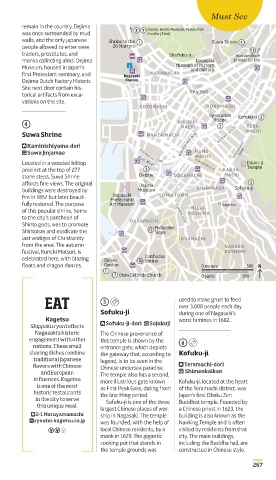
⌂ Kaminishiyama-dori KOKAIDO-MAE-DORI
v Suwa Jinjamae EDOMACHI-DORI HAMA- TERAMACHI- DORI
MACHI
Located in a wooded hilltop Oura River HAMANOMACHI Daion-ji
precinct at the top of 277 KAJIYA- Temple
stone steps, Suwa Shrine Dejima DOZAMACHI MACHI
affords fine views. The original Dejima
buildings were destroyed by Museum SHIAMBASHI Sofuku-ji
Nagasaki
fire in 1857 but later beauti Prefectural CHINATOWN
fully restored. The purpose Art Museum Kagetsu
NISHI-
of this popular shrine, home FUKKEN-DORI KOSHIMA
to the city’s pantheon of OURAMACHI
Shinto gods, was to promote Hollander
Shintoism and eradicate the Slope
last vestiges of Christianity INDAMACHI
from the area. The autumn NAKAKO-
festival, Kunchi Matsuri, is KOSHIMA
celebrated here, with blazing Glover Confucius
Shrine
floats and dragon dances. Garden 0 meters 500 N
Oura Catholic Church 0 yards 500
EAT 5 " used to make gruel to feed
Sofuku-ji over 3,000 peo ple each day
during one of Nagasaki’s
Kagetsu worst famines in 1682.
Shippoku ryori reflects ⌂ Sofuku-ji-dori v Sojukuji
Nagasaki’s historic The Chinese provenance of
engagement with other this temple is shown by the
nations. These small entrance gate, which de picts 6 "
sharing dishes combine the gateway that, ac cording to Kofuku-ji
traditional Japanese legend, is to be seen in the
flavors with Chinese Chinese undersea paradise. ⌂ Teramachi-dori
and European The temple also has a second, v Shimenkaikan
influences. Kagetsu more illustrious gate known Kofukuji, located at the heart
is one of the most as First Peak Gate, dating from of the Teramachi district, was
historic restaurants the late Ming period. Japan’s first Obaku Zen
in the city to serve Sofukuji is one of the three Buddhist temple. Founded by
this unique meal.
largest Chinese places of wor a Chinese priest in 1623, the
⌂ 2-1 Maruyamamachi ship in Nagasaki. The temple building is also known as the
∑ ryoutei-kagetsu.co.jp was founded, with the help of Nanking Temple and is often
local Chinese residents, by a visited by residents from that
monk in 1629. The gigantic city. The main buildings,
cooking pot that stands in including the Buddha hall, are
the temple grounds was constructed in Chinese style.
267
266-269_EW_Japan.indd 267 04/02/2019 15:58

