


Page 163 - (DK Eyewitness) Travel Guide - Italy
P. 163
P ADU A 161
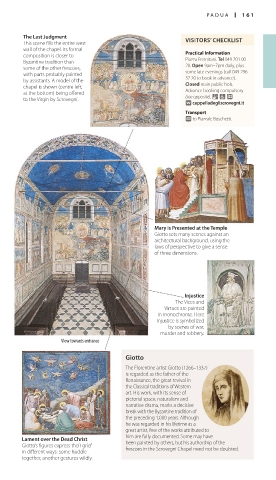
The Last Judgment
This scene fills the entire west VISITORS’ CHECKLIST
wall of the chapel. Its formal
composition is closer to Practical Information
Byzantine tradition than Piazza Eremitani. Tel 049 201 00
some of the other frescoes, 20. Open 9am–7pm daily, plus
with parts probably painted some late evenings (call 049 296
by assistants. A model of the 37 20 to book in advance).
chapel is shown (centre left, Closed main public hols.
at the bottom) being offered Advance booking compulsory
to the Virgin by Scrovegni. (see opposite). & 7 ^
∑ cappelladegliscrovegni.it
Transport
@ to Piazzale Boschetti.
Mary is Presented at the Temple
Giotto sets many scenes against an
architectural background, using the
laws of perspective to give a sense
of three dimensions.
Injustice
The Vices and
Virtues are painted
in monochrome. Here
Injustice is symbolized
by scenes of war,
murder and robbery.
View towards entrance
Giotto
The Florentine artist Giotto (1266–1337)
is regarded as the father of the
Renaissance, the great revival in
the Classical traditions of Western
art. His work, with its sense of
pictorial space, naturalism and
narrative drama, marks a decisive
break with the Byzantine tradition of
the preceding 1,000 years. Although
he was regarded in his lifetime as a
great artist, few of the works attributed to
him are fully documented. Some may have
Lament over the Dead Christ been painted by others, but his authorship of the
Giotto’s figures express their grief frescoes in the Scrovegni Chapel need not be doubted.
in different ways: some huddle
together, another gestures wildly.
160-161_EW_Italy.indd 161 4/4/17 5:33 PM

