


Page 36 - (DK Eyewitness) Travel Guide - Mallorca, Menorca & Ibiza
P. 36
INTRODUCING THE BALEARIC ISLANDS 35
THE HISTORY OF THE
BALEARIC ISLANDS
The Balearic Islands were often a target for conquest and this turbulent history
has left behind numerous reminders. Consecutive waves of raiders continually
destroyed the heritage of their predecessors and it was not until the conquest
of the islands by Jaume I, in 1229, that a period of relative stability began. But
even the centuries that followed this defeat were not a period of calm.
Earliest Inhabitants custom of placing pottery beakers in
The first people to live in the Balearic graves. The representatives of this culture
Islands probably arrived from the Iberian were capable of producing excellent
Peninsula. Archaeological findings bronze tools and utensils. They appeared
indicate that human occupation in the islands around 2300 BC.
was well established in Mallorca by
2800 BC and in Menorca by 2300 BC. Talayotic Period
Archaeological remains include flint The mysterious structures made of
tools, primitive pottery and artifacts giant stones found on the islands date
made of horn, giving evidence that from around 1300 BC. The most typical
these early settlers were shepherds of the time, which also gave the period
and hunters. As well as herding sheep, its name, is the talayot derived from
the earliest inhabitants of the Balearic the Arabic word atalaya, meaning
Islands hunted the local species of “observation tower”. These structures
mountain goat (Myotragus balearicus), appear in greatest numbers in Menorca,
which is now extinct. Most archaeological with somewhat fewer in Mallorca.
finds were discovered in caves, which None has been found in Ibiza. Other
were used for shelter and also for ritual common sights are taulas and navetas
burials. The best-preserved complex (see p103). In southern Europe similar
of caves, developed and extended structures can be found only in
by the Talayotic settlers who came to Sardinia (nuraghi).
the islands in 1300 BC, are the Cales These early inhabitants of the islands
Coves discovered near Cala en Porter, represented a relatively advanced
in Menorca. civilization. Some of them lived in
The Beaker ware found in Deià, in fortified settlements, such as Capocorb
Mallorca, represents a style known Vell, Mallorca, where over 30 stone
throughout Western Europe. Beaker houses and four massive talayots
People are so named because of their have been found.
2300 BC Beaker culture flourishes 1300 BC Beginning of
in the Iberian Peninsula the Talayotic civilization;
development of Cales Coves
2800 BC Human occupation well
established on the Balearic Islands 1500 BC Bronze Age
starts in the Balearics
6000 BC 4000 BC 3000 BC 2000 BC
Around 5000 BC Probable arrival of man can be
dated from finds around Sóller and Valldemossa
Arrowhead dating
from the Talayotic era
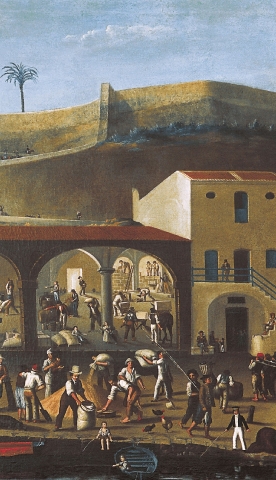
A painting of Maó harbour, Menorca, in the early 19th century
034-035_EW_Mallorca.indd 34 06/10/17 11:15 am 034-035_EW_Mallorca.indd 35 06/10/17 11:15 am

