


Page 15 - World of Animals - Issue #31
P. 15
T h e m   ad M    a r c h h  a r e
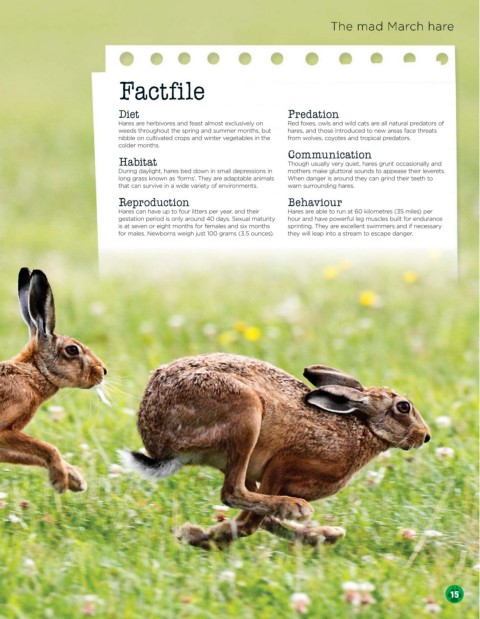
                                                                                               The mad March hare


                                     Factfile


                                     Diet                                          Predation
                                     Hares are herbivores and feast almost exclusively on   Red foxes, owls and wild cats are all natural predators of
                                     weeds throughout the spring and summer months, but   hares, and those introduced to new areas face threats
                                     nibble on cultivated crops and winter vegetables in the   from wolves, coyotes and tropical predators.
                                     colder months.
                                                                                   Communication
                                     Habitat                                       Though usually very quiet, hares grunt occasionally and
                                     During daylight, hares bed down in small depressions in   mothers make gluttoral sounds to appease their leverets.
                                     long grass known as ‘forms’. They are adaptable animals   When danger is around they can grind their teeth to
                                     that can survive in a wide variety of environments.  warn surrounding hares.
                                     Reproduction                                  Behaviour

                                     Hares can have up to four litters per year, and their   Hares are able to run at 60 kilometres (35 miles) per
                                     gestation period is only around 40 days. Sexual maturity   hour and have powerful leg muscles built for endurance
                                     is at seven or eight months for females and six months   sprinting. They are excellent swimmers and if necessary
                                     for males. Newborns weigh just 100 grams (3.5 ounces).  they will leap into a stream to escape danger.


                                                                                                                               15


       012-017_MarchHares.indd   15                                                                                          02/03/2016   12:35

