


Page 165 - (DK Eyewitness) Travel Guide - Sicily
P. 165
SICIL Y AREA B Y AREA 163
NORTHEASTERN SICILY
Thanks to the presence of Mount Etna, the Ionian coast
of Sicily has often had to deal with violent volcanic
eruptions. One of the most devastating was in
1669, when the molten lava even reached
Catania and the sea. The lava flows have formed
Etna’s distinctive landscape, and flowers and festoons
of black lava now adorn many of the churches and
buildings in Catania and the surrounding towns.
In 734 BC the first colonists from Greece people who undertook the Grand Tour
landed on this coast and founded in the 1700s and made their first stop
Naxos, the first of a series of powerful at Messina, just as many modern
colonies in Sicily that gave rise to a travellers do. In summer, the Ionian
period of prosperity and cultural coast is crowded because of the beauty
sophistication. However, volcanic of its beaches and sea. But it is also
eruptions and devastating earthquakes fascinating in the winter, when the top
have destroyed almost all traces of the of Mount Etna is covered with snow and
splendid Greek cities in this area, with the citrus orchards are heavy with fruit,
the exception of the ancient theatre in or in spring, when the air is filled with
Taormina, which was rebuilt in the the scent of orange blossom and flower
Roman era. The panoramic position, mild gardens in bloom. Another part of
climate and wealth of architectural northeastern Sicily worth visiting is the
beauty have made this coast a favourite archipelago of the unique Aeolian
with visitors. The first of these were Islands, of volcanic origin.
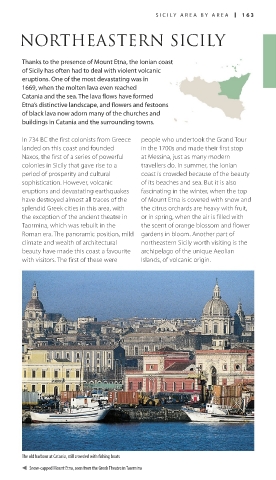
The old harbour at Catania, still crowded with fishing boats
Snow-capped Mount Etna, seen from the Greek Theatre in Taormina
SC_162-163.indd 163 18/11/2014 16:29

