


Page 269 - (DK Eyewitness) Travel Guide - Europe
P. 269
THE IBERIAN PENINSULA 267
SPAIN
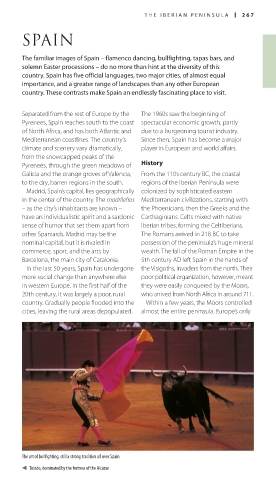
The familiar images of Spain – flamenco dancing, bullfighting, tapas bars, and
solemn Easter processions – do no more than hint at the diversity of this
country. Spain has five official languages, two major cities, of almost equal
importance, and a greater range of landscapes than any other European
country. These contrasts make Spain an endlessly fascinating place to visit.
Separated from the rest of Europe by the The 1960s saw the beginning of
Pyrenees, Spain reaches south to the coast spectacular economic growth, partly
of North Africa, and has both Atlantic and due to a burgeoning tourist industry.
Mediterranean coastlines. The country’s Since then, Spain has become a major
climate and scenery vary dramatically, player in European and world affairs.
from the snowcapped peaks of the
Pyrenees, through the green meadows of History
Galicia and the orange groves of Valencia, From the 11th century BC, the coastal
to the dry, barren regions in the south. regions of the Iberian Peninsula were
Madrid, Spain’s capital, lies geographically colonized by sophisticated eastern
in the center of the country. The madrileños Mediterranean civilizations, starting with
– as the city’s inhabitants are known – the Phoenicians, then the Greeks and the
have an individualistic spirit and a sardonic Carthaginians. Celts mixed with native
sense of humor that set them apart from Iberian tribes, forming the Celtiberians.
other Spaniards. Madrid may be the The Romans arrived in 218 BC to take
nominal capital, but it is rivaled in possession of the peninsula’s huge mineral
commerce, sport, and the arts by wealth. The fall of the Roman Empire in the
Barcelona, the main city of Catalonia. 5th century AD left Spain in the hands of
In the last 50 years, Spain has undergone the Visigoths, invaders from the north. Their
more social change than anywhere else poor political organization, however, meant
in western Europe. In the first half of the they were easily conquered by the Moors,
20th century, it was largely a poor, rural who arrived from North Africa in around 711.
country. Gradually people flooded into the Within a few years, the Moors controlled
cities, leaving the rural areas depopulated. almost the entire peninsula. Europe’s only
The art of bullfighting, still a strong tradition all over Spain
Toledo, dominated by the fortress of the Alcázar
266-269_EW_Europe.indd 267 14/07/16 10:15 am

