


Page 150 - (DK Eyewitness) Travel Guide - Tokyo
P. 150
148 TR A VELERS ’ NEEDS
Other Martial Arts Soccer fans may want to visit the
The center for martial arts in Nissan Stadium, Japan’s largest
Japan is the Nippon Budokan, stadium and host to the 2002
and this is where the top World Cup final. It is the home of
tournaments in judo, karate, the J-League’s Yokohama F. Mari-
and kendo (wooden sword nos. The Ajinomoto Stadium is
fighting) are held. There are home to FC Tokyo and Tokyo
dojo (practice halls) for the Verdy 1969, both J-League teams.
various martial arts through out Tickets are available at the sta-
Tokyo. Not all are open to non- dium on the day of the match.
Japanese as observers or
participants. Contact Tokyo Other Spectator Sports
TIC (see p159) for a list of dojos
that allow spectators. To Other sports with a significant
participate in martial arts train- presence include rugby, tennis,
ing, contact one of the nation al volleyball, swimming, athletics,
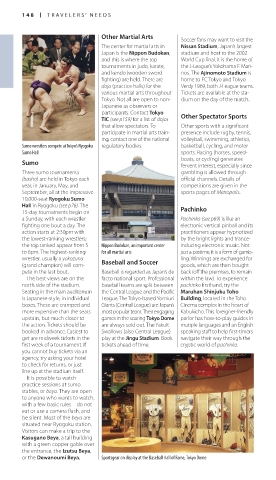
Sumo wrestlers compete at Tokyo’s Ryogoku regulatory bodies. basketball, cycling, and motor
Sumo Hall sports. Racing (horses, speed-
boats, or cycling) generates
Sumo
fervent interest, especially since
Three sumo tournaments gambling is allowed through
(basho) are held in Tokyo each official channels. Details of
year, in January, May, and competitions are given in the
September, all at the impressive sports pages of Metropolis.
10,000-seat Ryogoku Sumo
Hall in Ryogoku (see p76). The Pachinko
15-day tournaments begin on
a Sunday, with each wrestler Pachinko (see p69) is like an
fighting one bout a day. The electronic vertical pinball and its
action starts at 2:30pm with prac titioners appear hypno tized
the lowest-ranking wrestlers; by the bright lights and trance-
the top ranked appear from 5 Nippon Budokan, an important center inducing electronic music. Not
to 6pm. The highest-ranking for all martial arts just a pas time, it is a form of gamb-
wrestler, usually a yokozuna Baseball and Soccer ling. Winnings are ex chang ed for
(grand champion) will com- goods, which are then bought
pete in the last bout. Baseball is regarded as Japan’s de back (off the premises, to remain
The best views are on the facto national sport. Professional within the law). To experience
north side of the stadium. baseball teams are split between pachinko firsthand, try the
Seating in the main audito rium the Central League and the Pacific Maruhan Shinjuku Toho
is Japanese-style, in individual League. The Tokyo-based Yomiuri Building, located in the Toho
boxes. These are cramped and Giants (Central League) are Japan’s Cinema complex in the heart of
more expensive than the seats most popular team. Their engaging Kabukicho. This foreigner-friendly
upstairs, but much closer to games in the soaring Tokyo Dome parlor has how-to-play guides in
the action. Tickets should be are always sold out. The Yakult mutiple languages and an English
booked in advance. Easiest to Swallows (also Central League) speaking staff to help first-timers
get are midweek tickets in the play at the Jingu Stadium. Book navigate their way through the
first week of a tournament. If tickets ahead of time. cryptic world of pachinko.
you cannot buy tickets via an
agency, try asking your hotel
to check for returns, or just
line up at the stadium itself.
It is possible to watch
practice sessions at sumo
stables, or beya. They are open
to anyone who wants to watch,
with a few basic rules – do not
eat or use a camera flash, and
be silent. Most of the beya are
situated near Ryogoku station.
Visitors can make a trip to the
Kasugano Beya, a tall building
with a green copper gable over
the entrance, the Izutsu Beya,
or the Dewanoumi Beya. Sportsgear on display at the Baseball Hall of Fame, Tokyo Dome
148-149_EW_Tokyo.indd 148 12/09/16 11:28 am

