


Page 152 - (DK Eyewitness) Travel Guide - Tokyo
P. 152
150 TR A VELERS ’ NEEDS
Traditional Performing Arts In contrast, a Noh performance
can be heavy going for those
Despite Tokyo’s ultra-modern exterior, its heart still moves to a unprepared for its slow pace.
traditional beat. The rarified, otherworldly court music known As a theatrical experience,
as gagaku dates back much further than the city itself, as does however, it can be exceptionally
the Noh Theater (see p18). It is, however, the performing arts po werful. The National Noh
Theater near Sendagaya JR
of the Edo period (see p27), especially Kabuki and the Bunraku station usually has weekend
puppet theater (see p19), that capture the rich, vibrant cultural performances. Tickets vary from
life of premodern Japan. Such displays are not hard to find – ¥2,300 to ¥4,300. It is also
at the Kabuki-za Theater, for example, just walk in off the possible to see plays at a Noh
street, buy a one-act ticket, and travel back in time. school, for instance Kanze
Nohgakudo. Outdoor Noh
performed by torchlight (Takigi
Noh) can be wonderfully
atmospheric, especially when
staged in front of an ancient
shrine or temple, such as with
the annual fall performances
at the Kamakura-gu shrine, in
the hills of Kamakura. More
information is readily available
from JNTO (see p159) or the
Kamakura Tourist Association.
The puppet theater, Bunraku,
predates Kabuki, and many of
its plays were later adapted to
the stage. The black-robed
An elegant cypress performance stage, National Noh Theater puppeteers are so skillful, you
soon ignore their presence
Traditional Theater or more hours. It is also possible and just watch the lifelike
Kabuki and Noh, the two best- to buy a ticket to see just one move ments of the puppets
known forms of traditional the- act if you are short of time. themselves. Performances
ater (see pp18–19), are well Prices range from around can be seen at the National
represented in Tokyo. Of the ¥2,500 to as much as ¥16,000; Theater’s Small Hall.
two traditions, Kabuki pro vides one-act tickets are around Kyogen (short comic farces)
a much more flamboyant ¥700. Earphone guides is one of Japan’s oldest
spectacle, with rousing sto ries, giving explanations and forms of drama, and
elaborate sets, and am azing commentary in English in cludes acrobatics and
costumes. However, dramatic are available to hire. juggling. Now played to
action sequences can often be The National Theater comic ef fect, Kyogen is
interspersed with extended also stages Kabuki often per formed as
soliloquies. The Kabuki-za performances in January, part of Noh, or as
Theater (see p42) is the main March, October, individual plays
venue for Kabuki, with almost November, and between Noh plays.
daily performances starting December. A number of Another lighthearted
mid-morning and lasting three unorthodox versions theatrical tradition is
of Kabuki have been Rakugo. Dressed in a
developed to make it kimono and sitting on
more contemporary. a zabuton (cushion),
Super Kabuki, introduced the story tellers act out
in 1985 and staged at comic situations, often
the Shinbashi Enbujo, A giant Bunraku retelling old and well-
adds high-tech special puppet loved stories. Held
effects (such as actors at intimate theaters
flying through the air) to the such as Suzumoto in Ueno
traditional plots. Cocoon or Suehirotei in bustling
Kabuki, a project launched in Shinjuku, they give great insight
1994, brings the traditional into characteristic Japanese
plays and costumes each traditional humor, even without
summer to the Theater understanding the language.
Cocoon in Shibuya, which is A few Rakugo artists have also
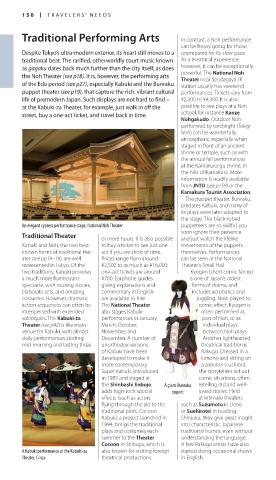
A Kabuki performance at the Kabuki-za also known for visiting foreign started doing occasional shows
Theater, Ginza theatrical productions. in English.
150-151_EW_Tokyo.indd 150 12/09/16 11:28 am

