


Page 44 - (DK Eyewitness) Travel Guide - Tokyo
P. 44
42 T OK Y O AREA B Y AREA
squid to porcelain tea cups are
on offer.
Another vestige of the Tsukiji,
located near the Kachidoki
Bridge entrance to the market,
is the Namiyoke Inari Jinja
(Wave-repelling Fox Shrine),
where fishermen and traders
have come for decades to pray
for safety and prosperity.
4 Hama-rikyu
Gardens
Hama Detached Palace Garden
Kabuki actors performing at the Kabuki-za Theater Map 5 B4. Tel (03) 3541-0200.
Shiodome stn, Oedo line.
2 Kabuki-za Theater 2016. Despite losing its status £ Shimbashi stn, Yamanote
as Japan’s primary seafood
Kabuki-za Theatre line. 4 Sumida River Trip.
Open 9am–5pm. (Last adm
wholesaler, the district remains
Map 5 C3. 4-12-15 Ginza. Tel (03) a mecca for lovers of fresh 30 mins before closing.) &
3545-6800. Higashi-Ginza stn, seafood and the original
Toei Asakusa & Hibiya lines. &
∑ kabuki-bito.jp/eng/contents/ “outer market” has remained Situated where the Sumida
theatre/kabukiza.html where it was, although it has River empties into Tokyo Bay,
lost some of its gritty, old-world this 62-acre (25-ha) garden was
Tokyo’s principal theater for charm. The vendors are now built in 1654 as a retreat for the
Kabuki (see p19) opened in mainly located in a slick, multi- shogun’s family and opened to
1889 during the reign of story building where it is still the public in 1945. Former US
Emperor Meiji – a part of possible to see and taste many President Ulysses S. Grant stayed
Kabuki’s shift from popular unusal types of freshly caught in a villa in the gardens during
daytime enter tainment for the fish. Seafood lovers won’t be his visit in 1879 and sipped
Shita machi masses in Asakusa disappointed as the area still green tea with Emperor Meiji
to a more highbrow art form. serves some of the freshest in Nakajima teahouse.
The building was one of sushi around. The lovely garden grounds
the striking examples of the Visitors longing for a less surround ing the duck ponds
use of Western building sterile market experience can are still a pleasant place to
materials and techniques enjoy perusing the remaining stroll and sit. All of the original
in traditional Japanese style. mom-and-pop-style shops and teahouses and villas, trees,
Partially destroyed by the stalls that line the streets and and vegetat ion burned
Allied bombing of 1945, alleys surrounding the market, down after a bomb ing raid
the theater was rebuilt in where everything from dried on November 29, 1944.
1951, only to be demolished
completely in 2010. A brand-
new structure re-opened in
March 2013 (see pp150–51).
3 Tsukiji Fish
Market
築地魚河岸 Tsukiji Fish Market
Map 5 C4. Tsukijishijo stn, Toei
Oedo line; Tsukiji stn, Hibiya line.
Open 5am–2pm Mon–Sat. ∑ tsukiji.
or.jp/english/accessmap.html
Formerly the largest fish market
in the world, Tsukiji was the
heart of Japan’s thri ving seafood
trade. Originally established in
1935, the wholesale “inner
market” was controversially
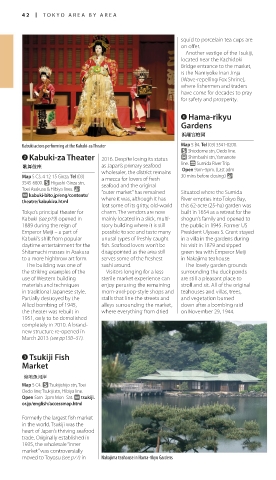
moved to Toyosu (see p77) in Nakajima teahouse in Hama-rikyu Gardens
042-043_EW_Tokyo.indd 42 12/09/16 2:14 pm

